
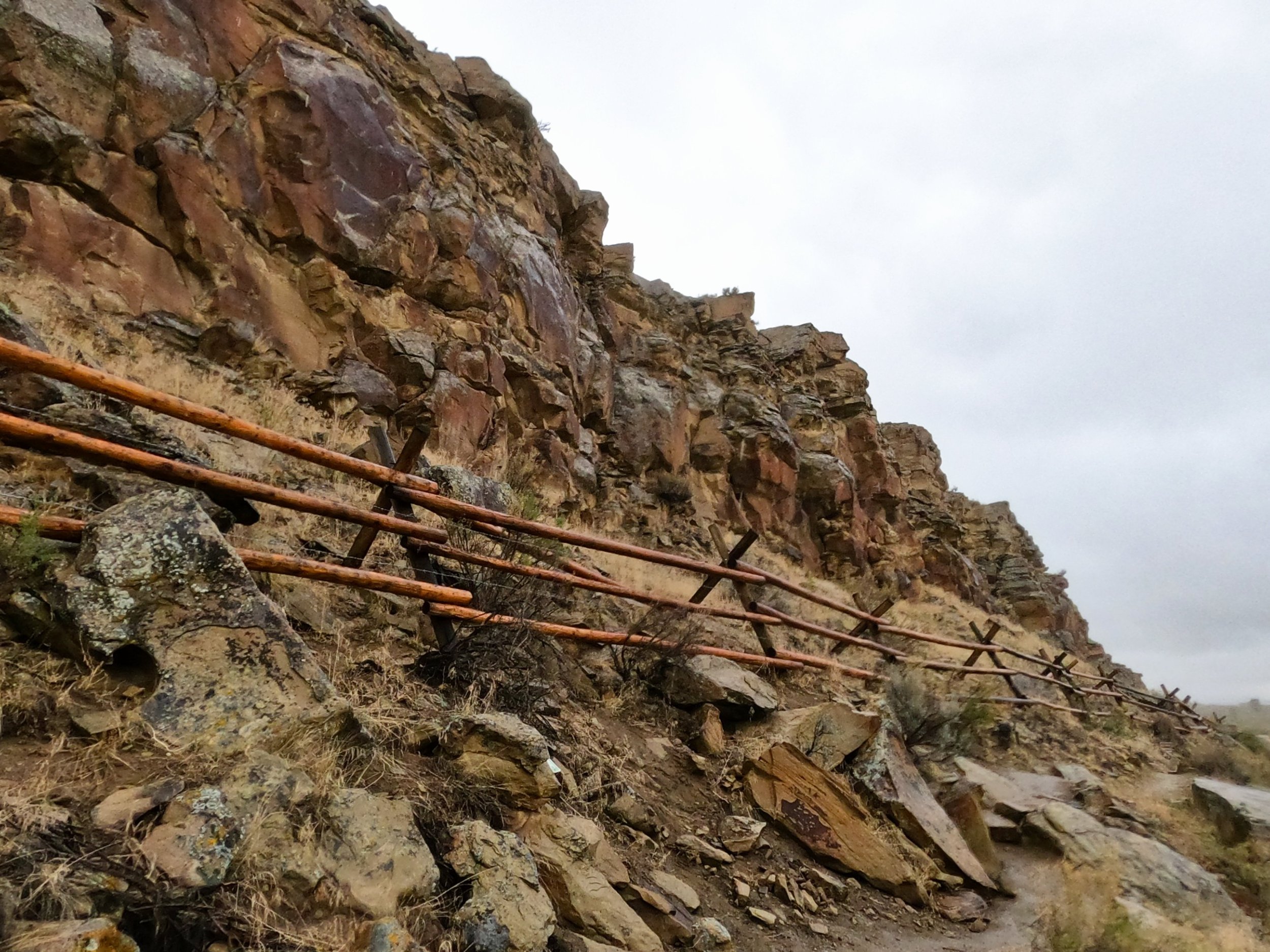
On the rainy Legend Rock trailhead, taken in October of 2025 on my Gopro
With over 300 recorded petroglyphs, some dating back to around 11,000 years ago, “Legend Rock Petroglyph Site” features some of North America’s, and Planet Earth’s most ancient human rock art!
Located in North-Central Wyoming, 30 miles Northwest of Thermopolis, Wyoming, in Hot Springs County, this protected area is a truly underrated gem for anyone who has the slightest amount of curiosity with ancient human art, or activity…
And is home to some one-of a kind rock art figures, which may as well look like they are from another planet! (Insert some spooky 1950’s “B” Movie sounds for effect).
In this article, I will describe the history, and culture of this area, as well as highlight some of the most other-worldly glyphs, which I was lucky to see myself!
Some of which look like aliens, and even…
A Dinosaur?
Follow me to the end…for my favorite glyph! It is not what you expect!
Buckle up…it’s gonna get very weird!
Stories Engraved In Stone
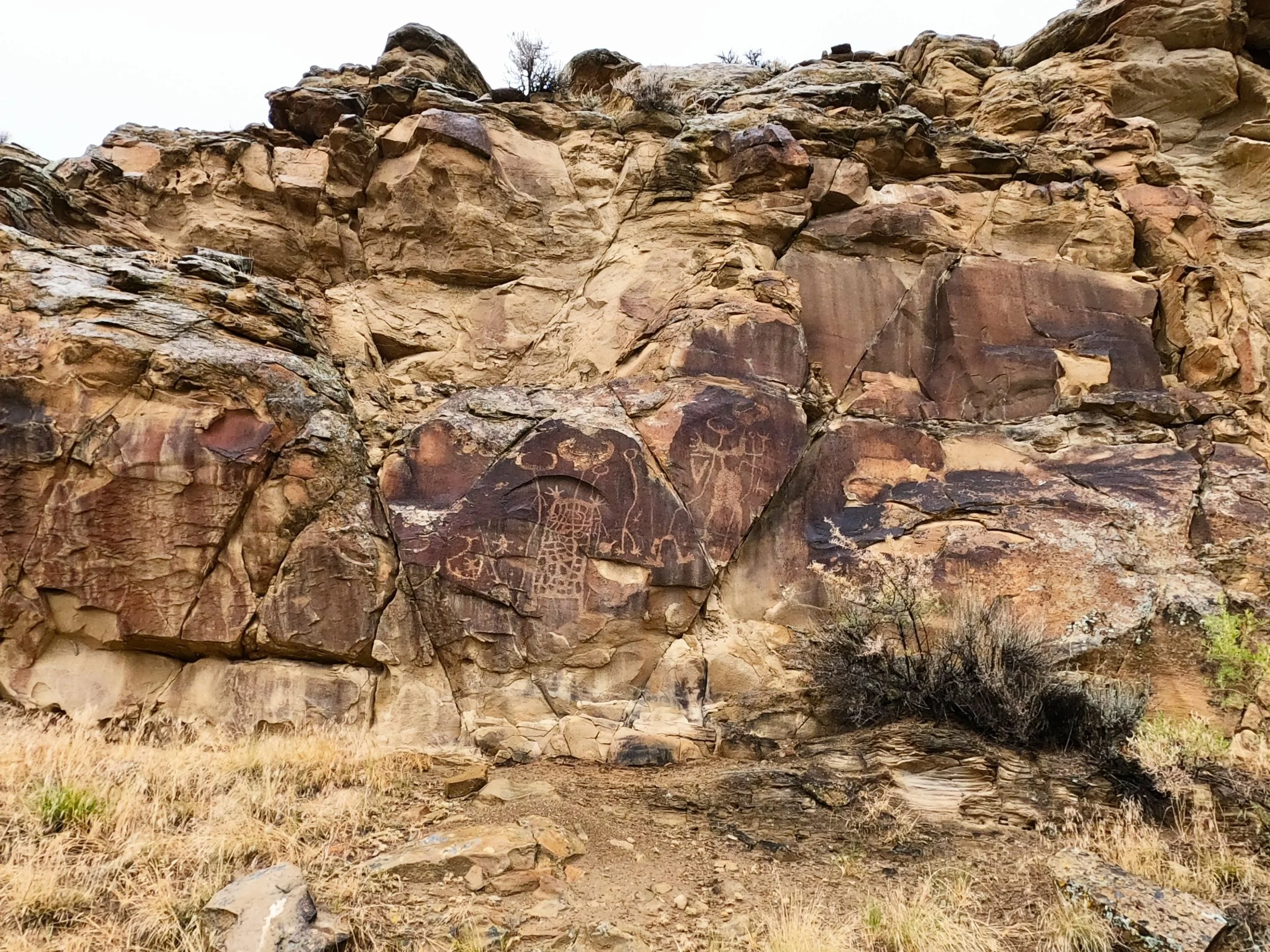
Unusual “Horned” human-like figures appear across the site
Who exactly carved these enigmatic figures and animals into the sandstone cliffs, on these rocky hills of Central Wyoming? We actually have an answer!
The ancient descendants of the Shoshone Native Americans, called: The ‘Dinwoody Tradition,’ were the first humans to populate, and traverse this part of the Rocky Mountains. The oldest glyphs have been estimated to be near 11,000 years, to 4,000 years old, with some newer glyphs appearing from 1,500 years, up until the year 1990, (unfortunately) by local trespassers!
Since horses were not introduced to the region, until the last 300 years of human history, we can tell that these glyphs are relatively new, perhaps drawn by frontiersmen, or by travelling Shoshone.
What Do They Mean?
Short answer…we may never know for sure!
Most of these glyphs are identified as either humans, animals, or spiritual beings from their respective folklore. It is almost impossible to say why these were created, but many of these abstract images can reflect many things such as;
Documentation of important events
A legend of animals/megafauna in the area
Spiritual figures that are related to the groups from the region
Visions of dreams
Important battles
Archaeologists can agree on a few things:
1) They represent supernatural beings
Shoshone elders described as Water Spirits, Power Beings, or Other-World Helpers connected to vision quests
2) They are connected to the “spirit world”
They seem to mark places where the veil between physical/spiritual realms was thin
3) They may be tied to medicine rituals
Some Dinwoody panels align with traditional Shoshone medicine power traditions, involving:
fasting and prayer
dreams & visions
quests for guardian spirits
4) The interior lines may represent spiritual power
Possibly the “inner life” or energetic structures of spirit beings.
Dinwoody sites were not living spaces, but ceremonial outdoor sanctuaries.
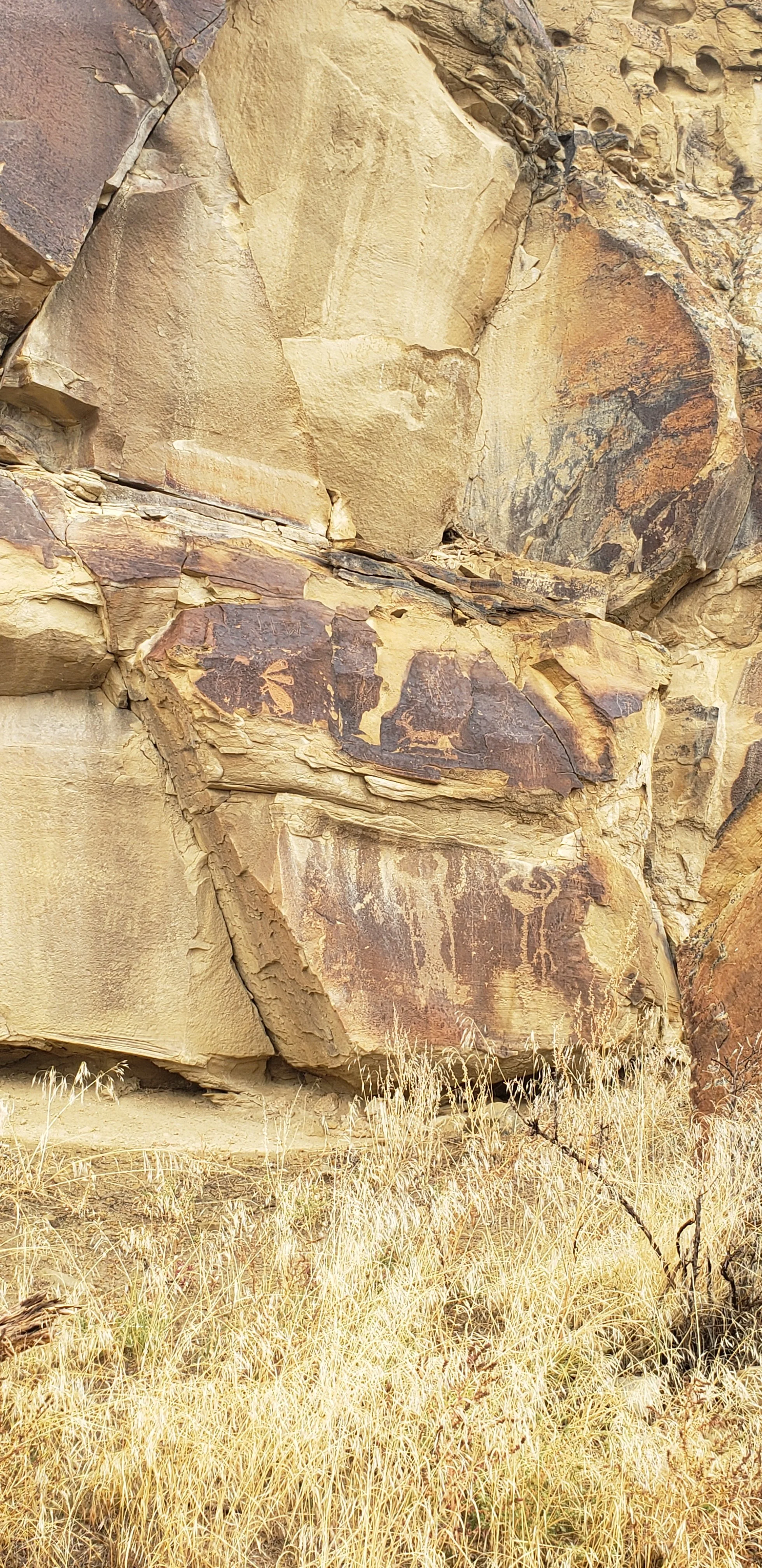
This marker is full of “Zoomorphic” shapes, such as a rabbit, a quadrupedal mammal, and “Spiritual” horned beings
Quite possibly, some wandering groups wanted to draw and leave a lasting reminder that they existed. A very human quality.
Though archaeologists have spent many decades of study to fully understand this site, and the Dinwoody style, and their meanings, we may never truly know for sure.
Take a look at some of these bizarre images that you find along the trail!
The Trail Of Mystery
Fun fact, I visited this area by myself, on a very dark and rainy day!
I thought this place felt very spooky, and other-worldly. Not many places made me feel like this…but it is not hard to feel like you are on a different plane of existence, or if you’re like me…you’d feel like Indiana Jones!
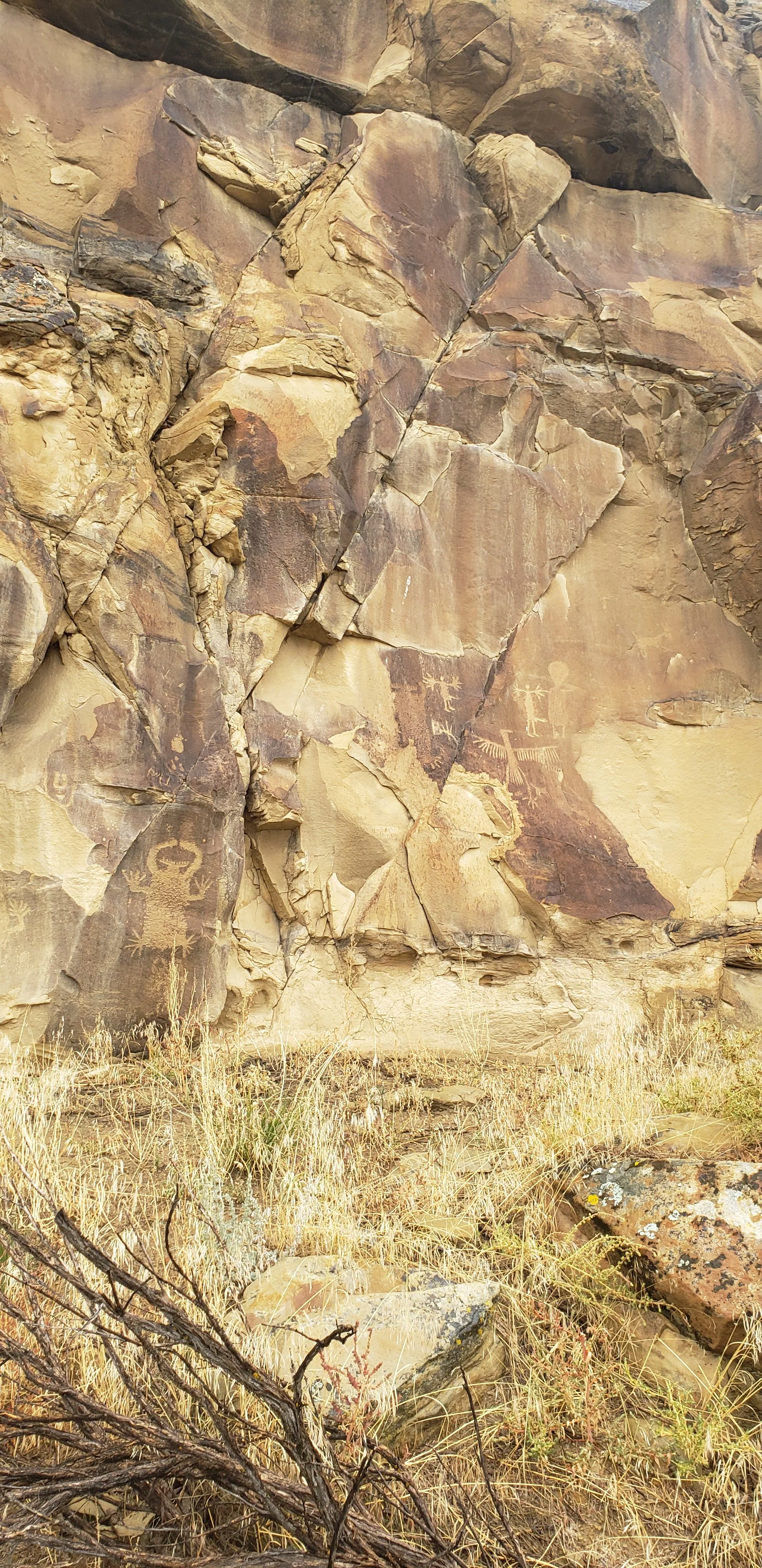
Top Right: Scared Native American “Thunderbird,” “Winged humans” with penises (yup), and a peculiar glyph resembling a “Grey Alien”
Bottom Left: A strange creature appearing like a beetle mixed with a lizard, or frog
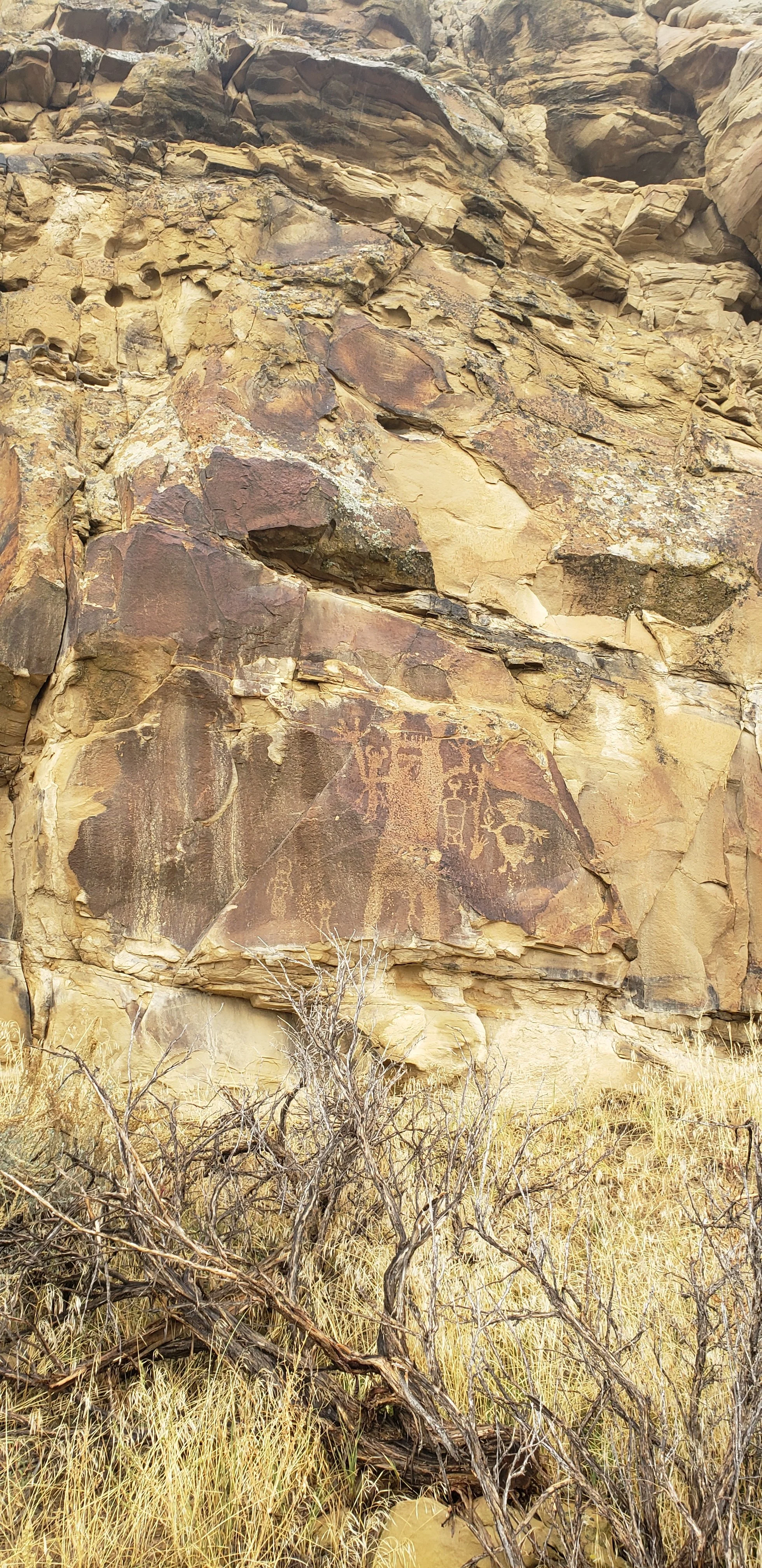
Do you think these creatures look like extraterrestrials? Or a depiction of an event from Proto-Native American folklore?
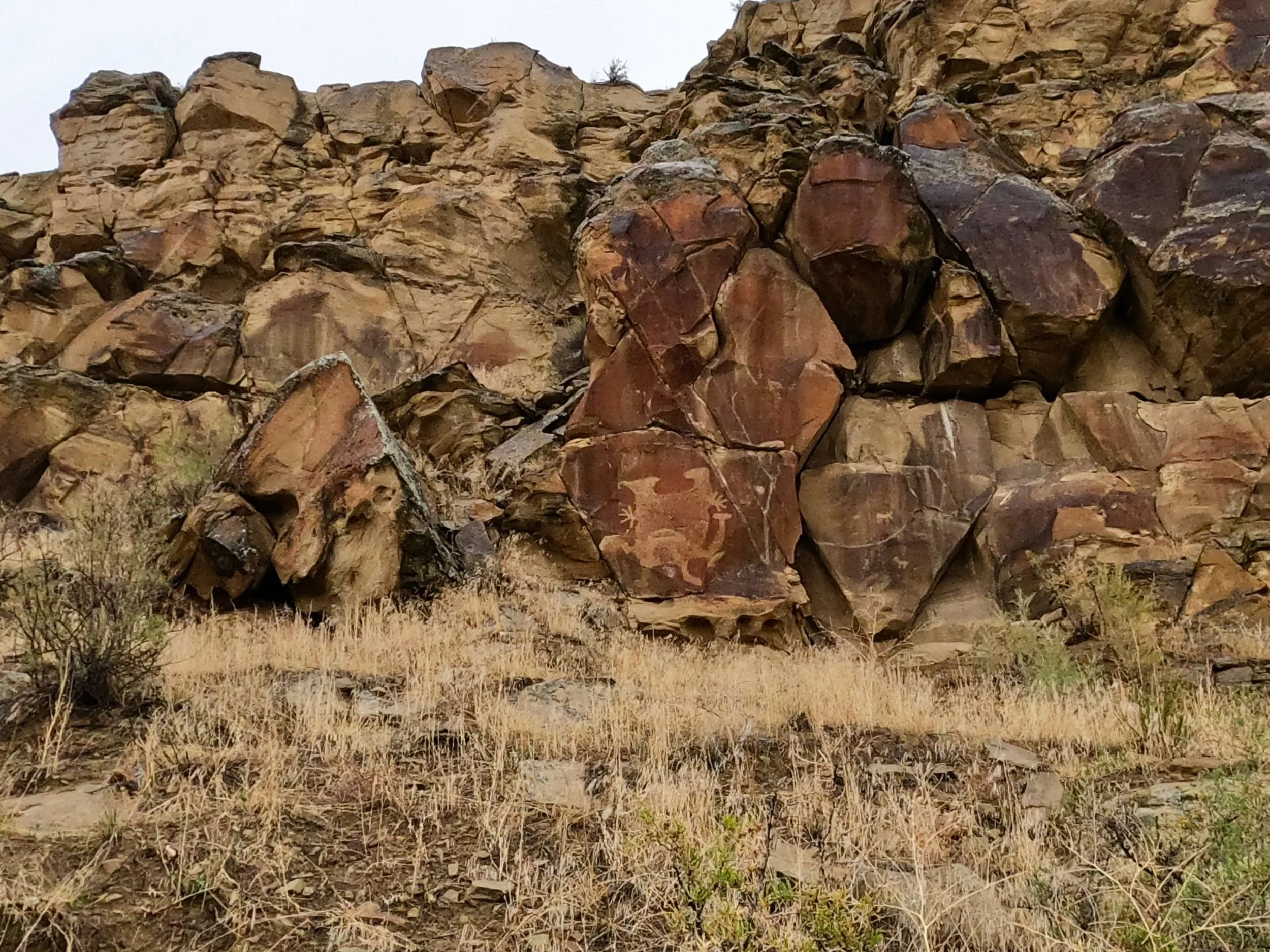
One of the more “Alien”-looking glyphs, depicting an unknown creature. In the right, a few quadrupedal creatures, possibly deer or other mammals are featured
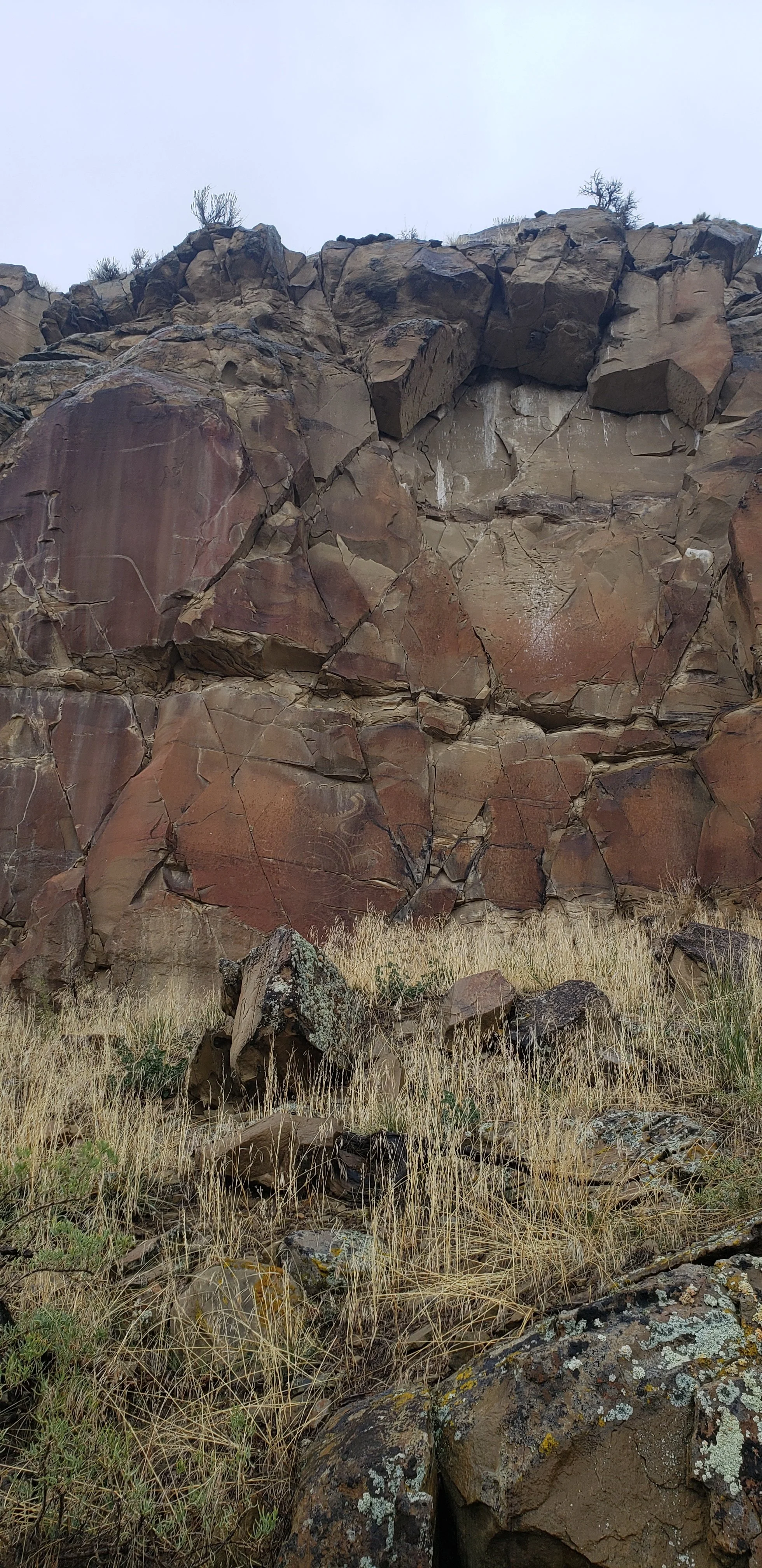
Look closely to the base of the cliff, and you will see a circular figure, made of concentric circles, which is identified as a astronomical calendar, or a sky deity
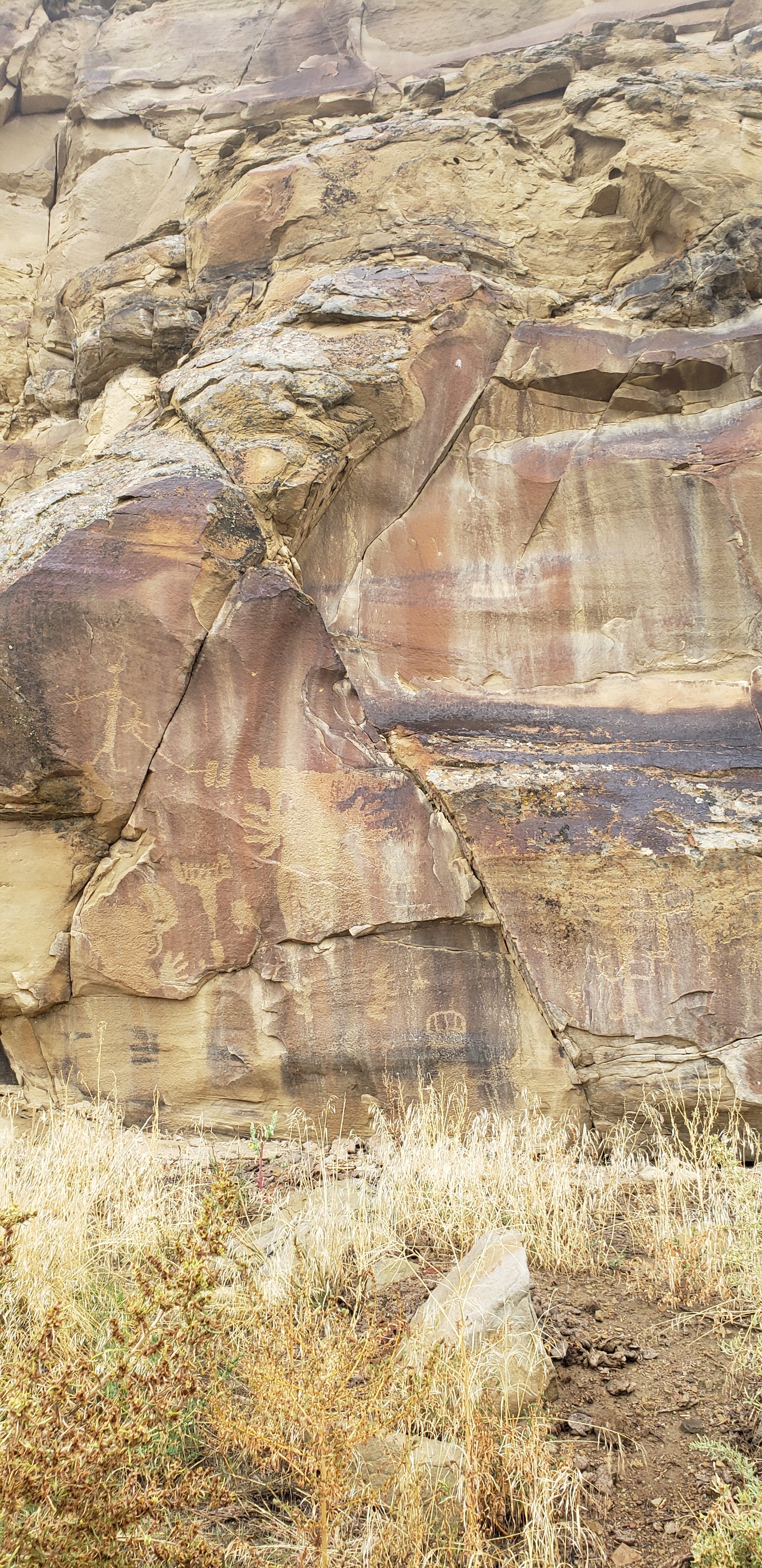
More enigmatic shapes and humanoid figures
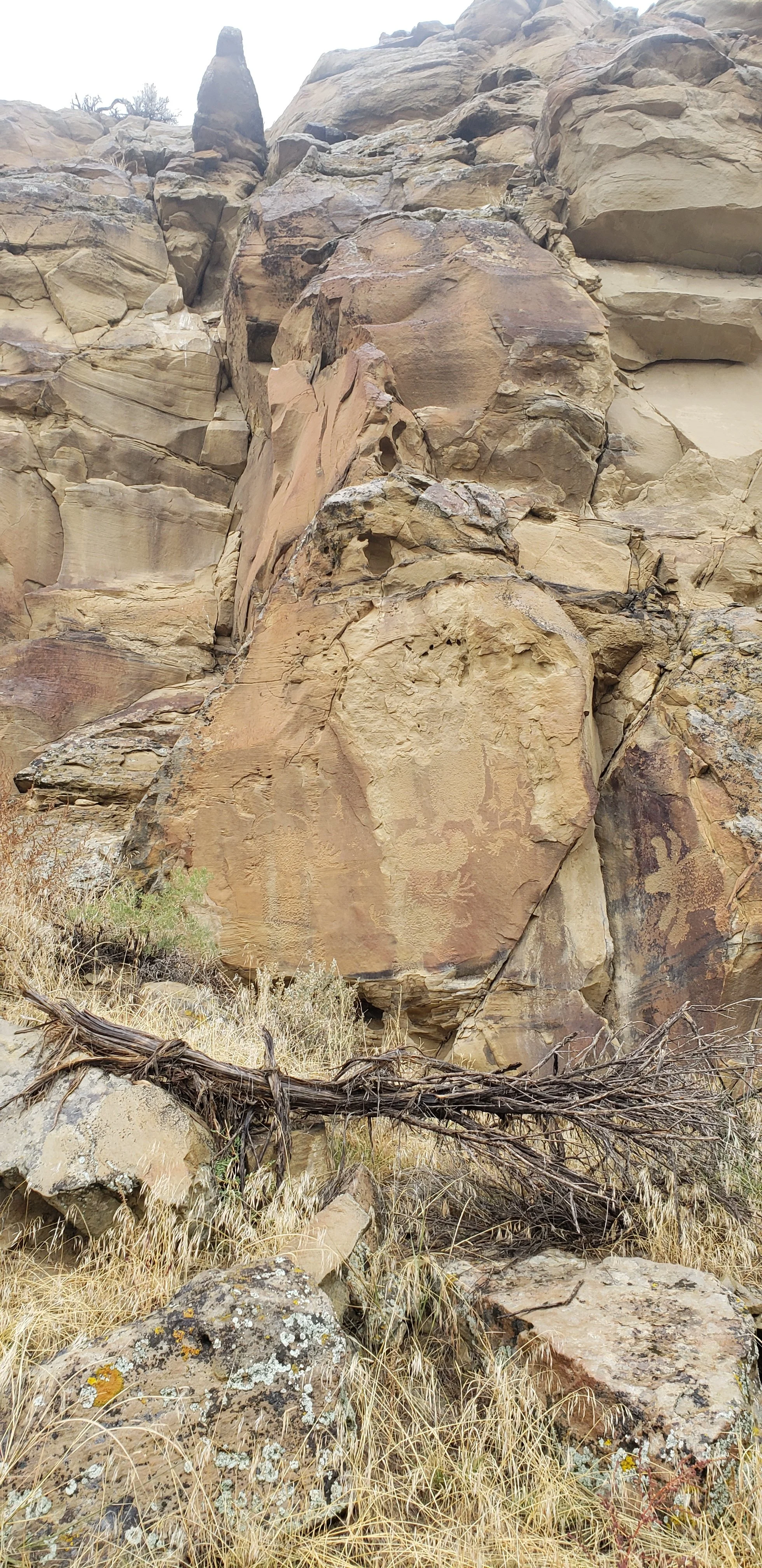
More bizarre figures, and a creature (right) that resembles a rabbit
But NOTHING prepared me for the most amazing glyph of them all, below!
Did We Walk With Dinosaurs?
Anyone who grew up with me in public school would remember how I was obsessed with Prehistoric beasts, and dinosaurs! But never in my life would I have imagined that I would see a carving of one!
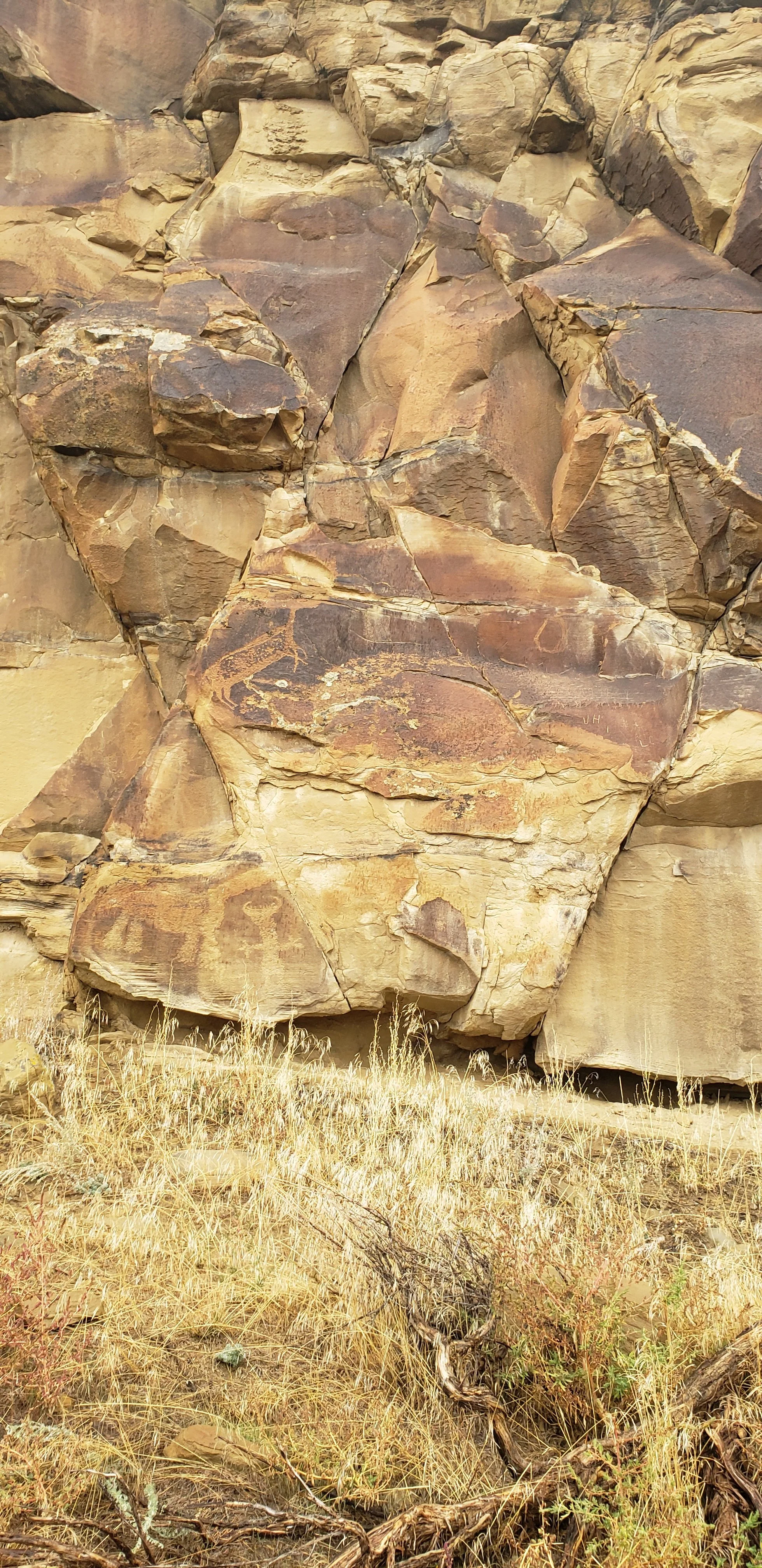
In the bottom-left, is a glyph that resembles a long-necked Sauropod dinosaur, with a horned human, and a four-legged mammalian creature above
I strongly believe that I am witness to a glyph of a Sauropod, like a Brachiosaurus, or Supersaurus. Nothing online showed this glyph, and I doubt that any papers have been written about this particular glyph, but to me…it resembles an extinct long-necked dinosaur, thought to have been wiped out gradually, within the epoch of 65 million years ago.
It truly made me ask the question…”were all dinosaurs wiped out when we thought they went extinct?”
To be clear …I am not insinuating, nor confirming that this is without a doubt, a dinosaur…
I am simply opening up an honest discussion
Some archaeologists suggest that the “Dino” could represent a water spirit, or another creature from myth, like a cryptid. For all I know, this may be something else entirely, or it may be resembling a dinosaur that a group witnessed, and felt compelled to carve this motif into the rocks.
I will let you be the judge to say yes or no. We may never know. But I have some suggestions.
What I find is the most interesting thing, is that this whole region, is a global hot-bed of paleontological finds that are world-renowned, called the “Morrison Formation.”
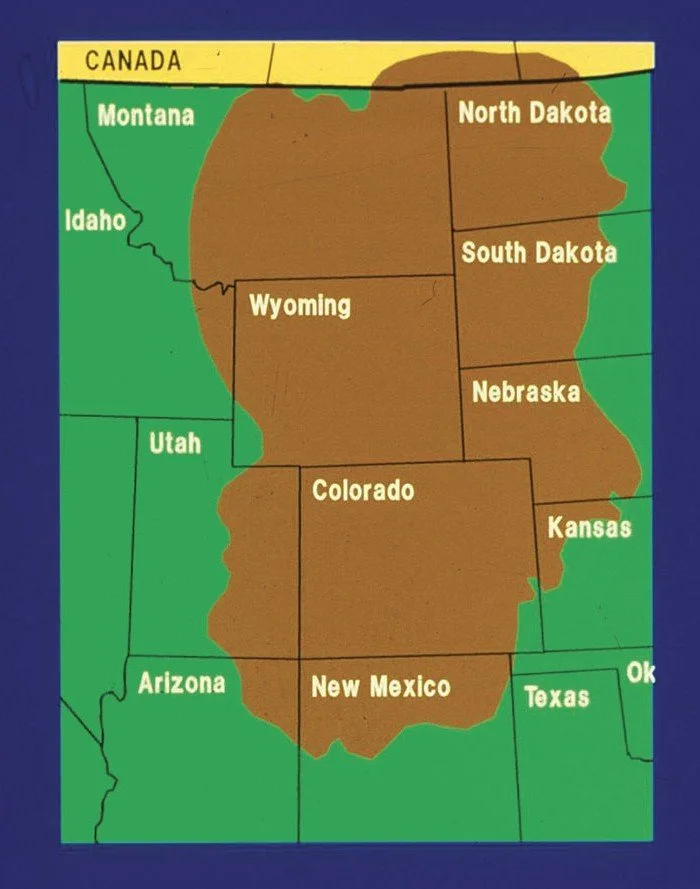
Stretching from SW USA, even up into Southern Canada, the Morrison Formation is a widespread layer of sedimentary rock laid down during the Late Jurassic Period. It covers huge portions of the western United States, including Wyoming, Montana, Colorado, Utah, New Mexico, and Oklahoma.
A Geological Hotspot
For context, Some of the most iconic Late Jurassic dinosaurs come from here:
Sauropods
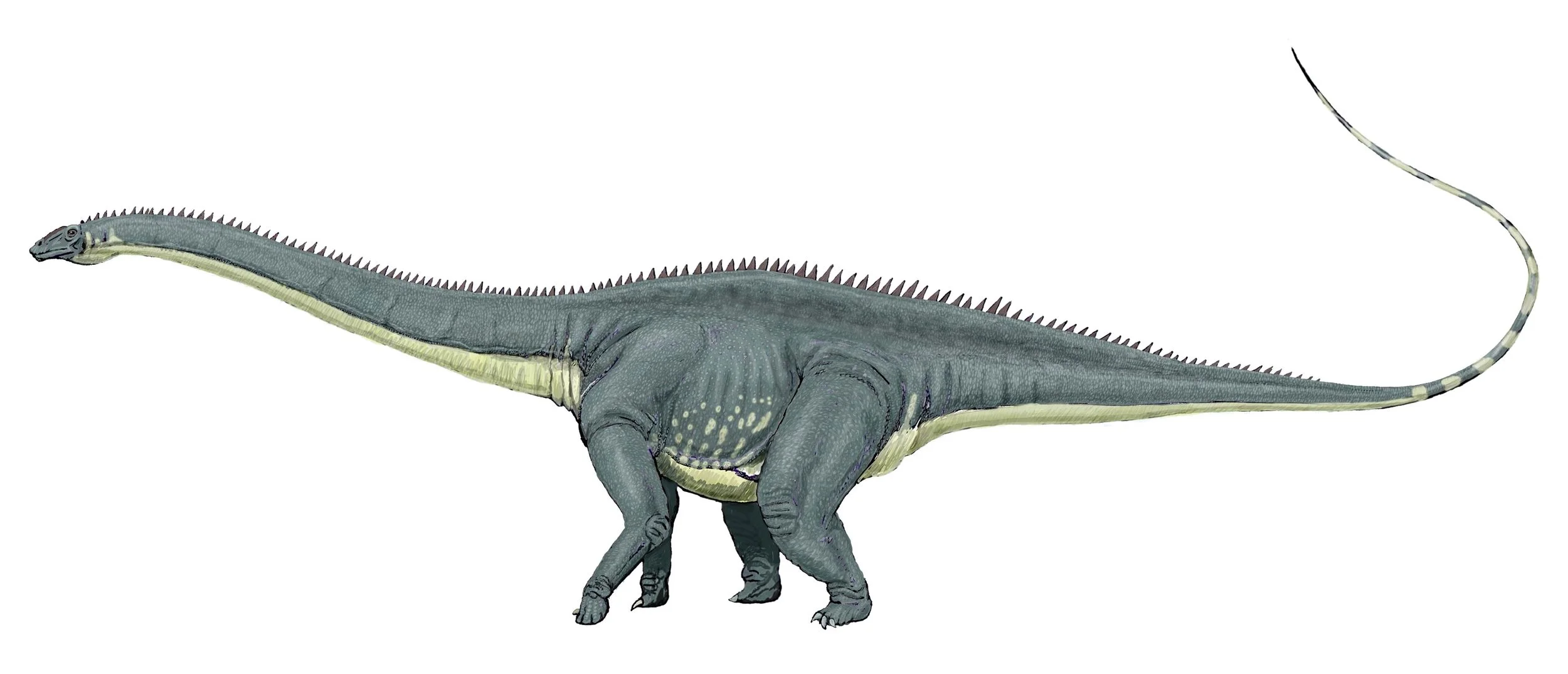
Diplodocus
Diplodocus
Apatosaurus
Barosaurus
Camarasaurus
Supersaurus
Theropods
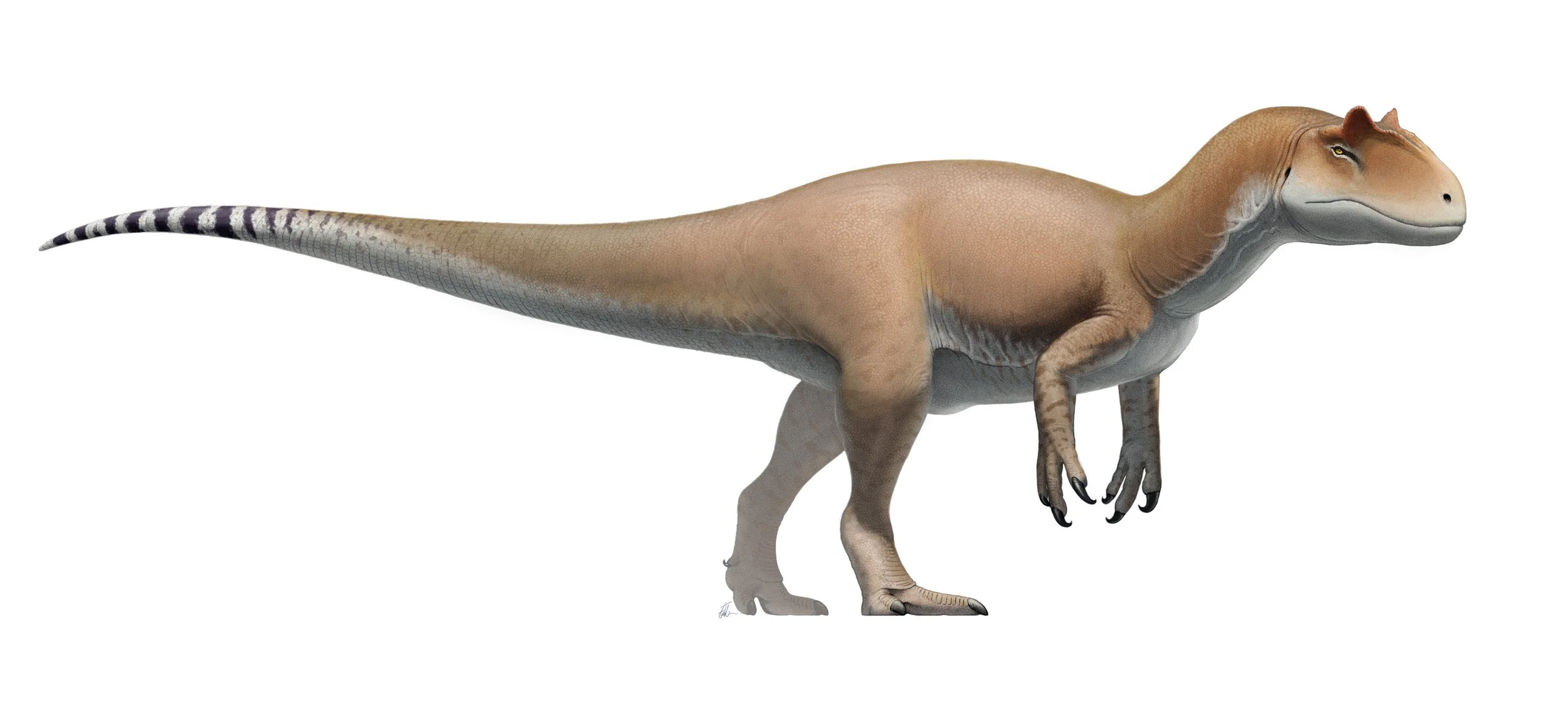
Allosaurus
Allosaurus
Torvosaurus
Ceratosaurus
Ornithischians
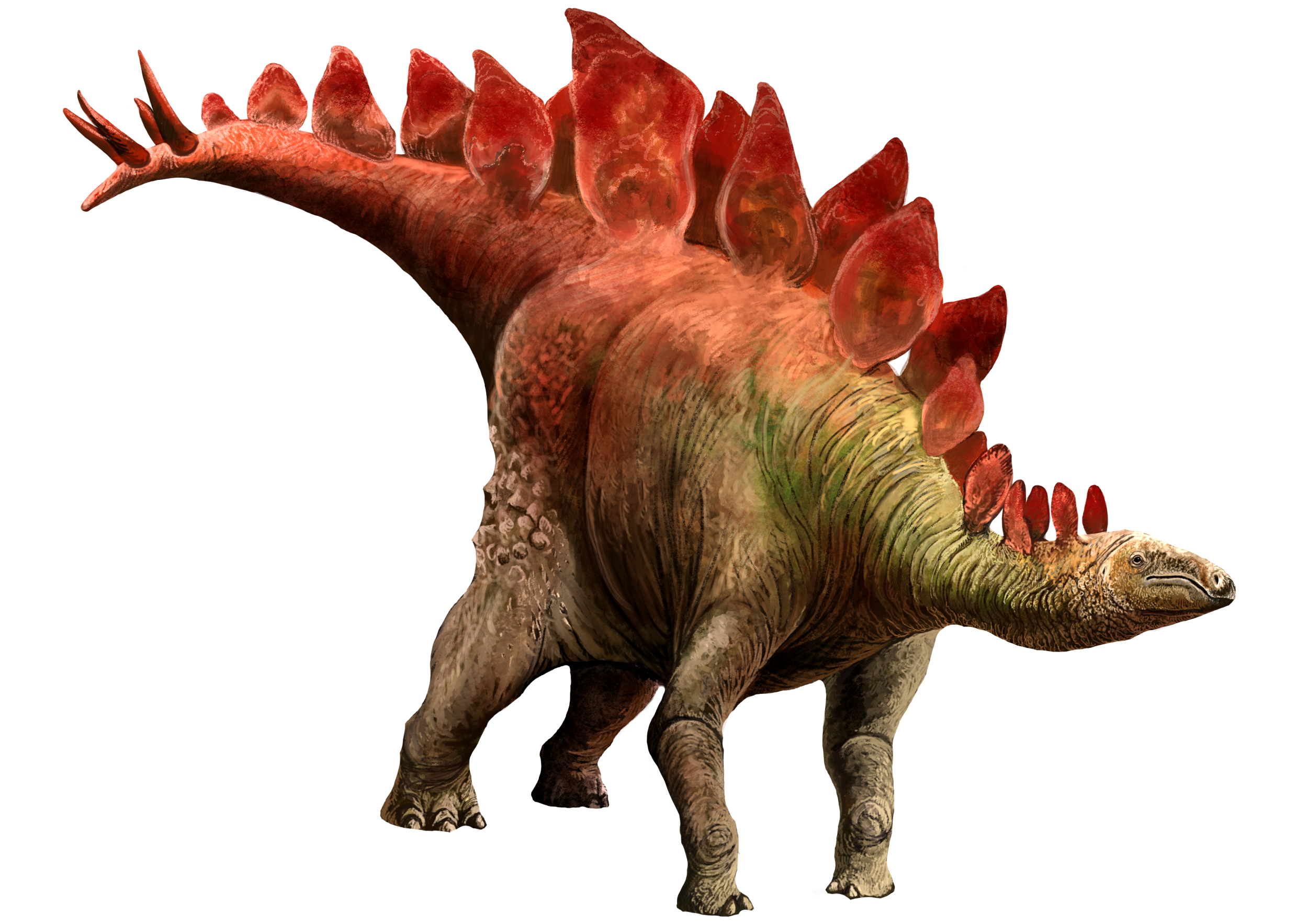
Stegosaurus
Stegosaurus
Dryosaurus
Camptosaurus
The Morrison also preserves:
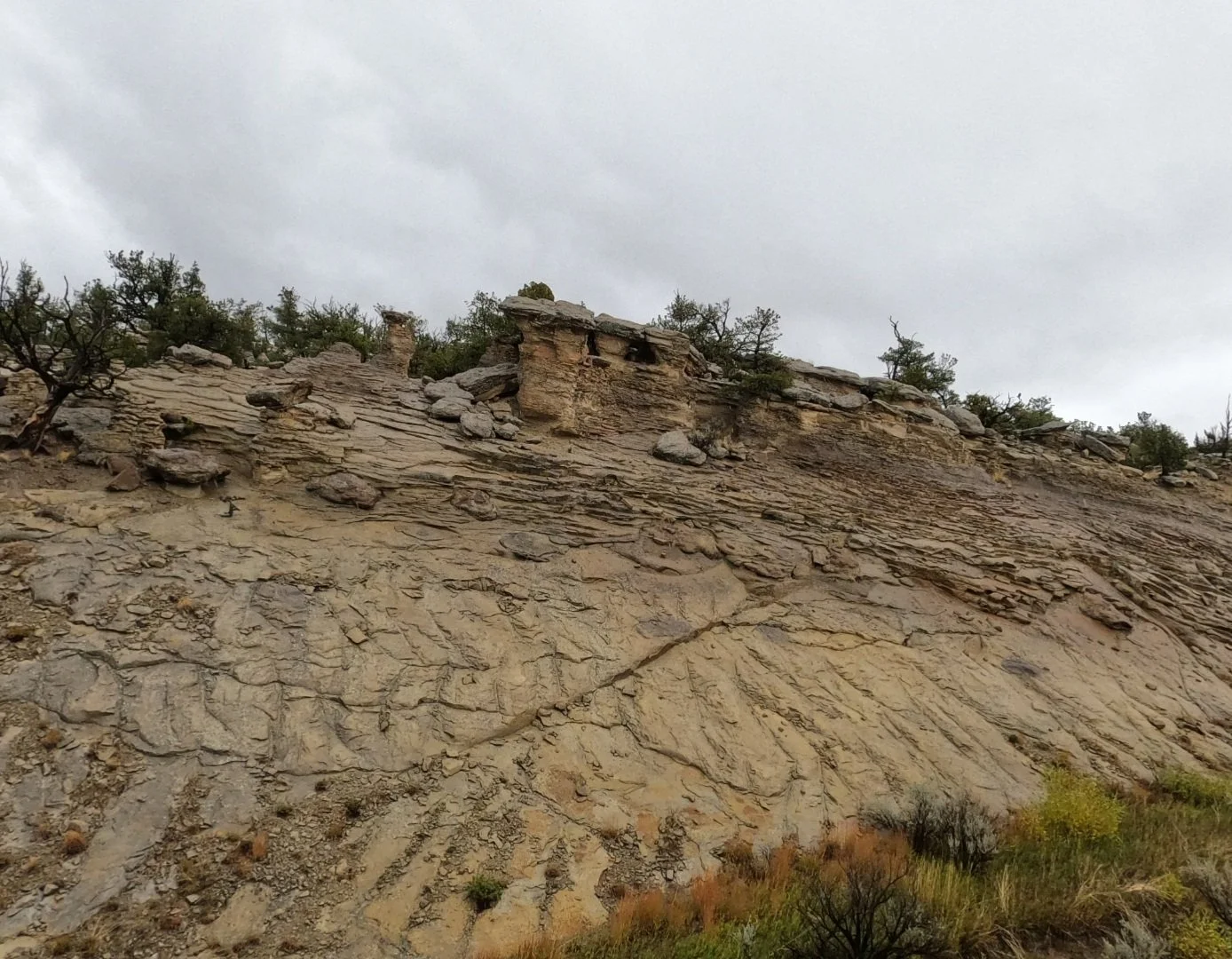
Surrounding area near Legend Rock
Fossilized forests
Freshwater turtles
Crocodile relatives
Tiny mammals
Insects
Fish
Petrified wood
A FULL Jurassic ecosystem.
Take A Side-Trip For Proof!
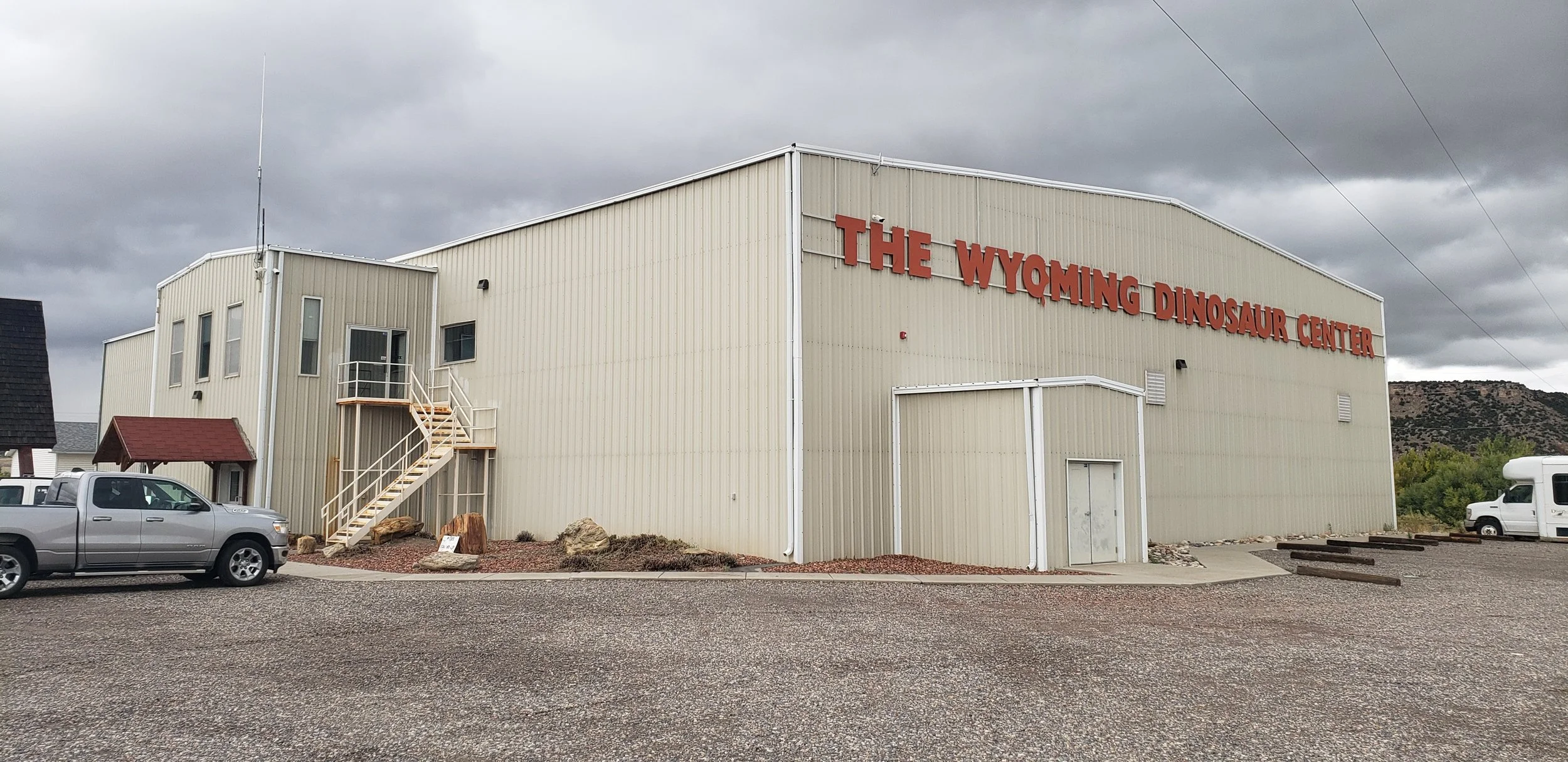
The incredible Wyoming Dinosaur Centre, a must-see for any fan of history!
Not too far away in Thermopolis, just a half hour drive South, is the Wyoming Dinosaur Centre, where the World’s largest Supersaurus skeleton is found!
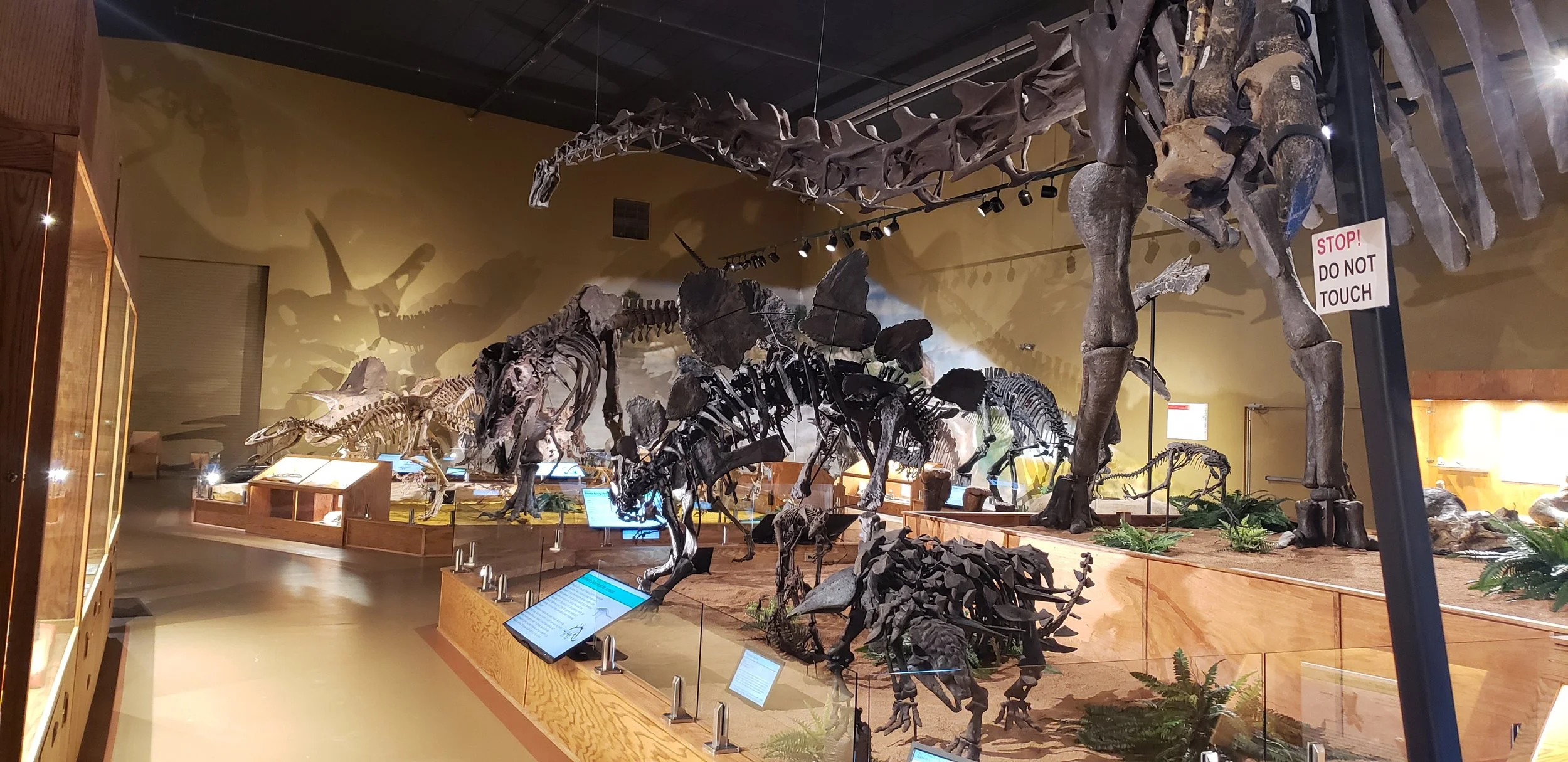
Top: The world’s largest Supersaurus skeleton, found near Thermopolis!
To conclude, do you believe that the glyph looks like a Dinosaur? Or could I be totally incorrect?
Travelers’ Notes…
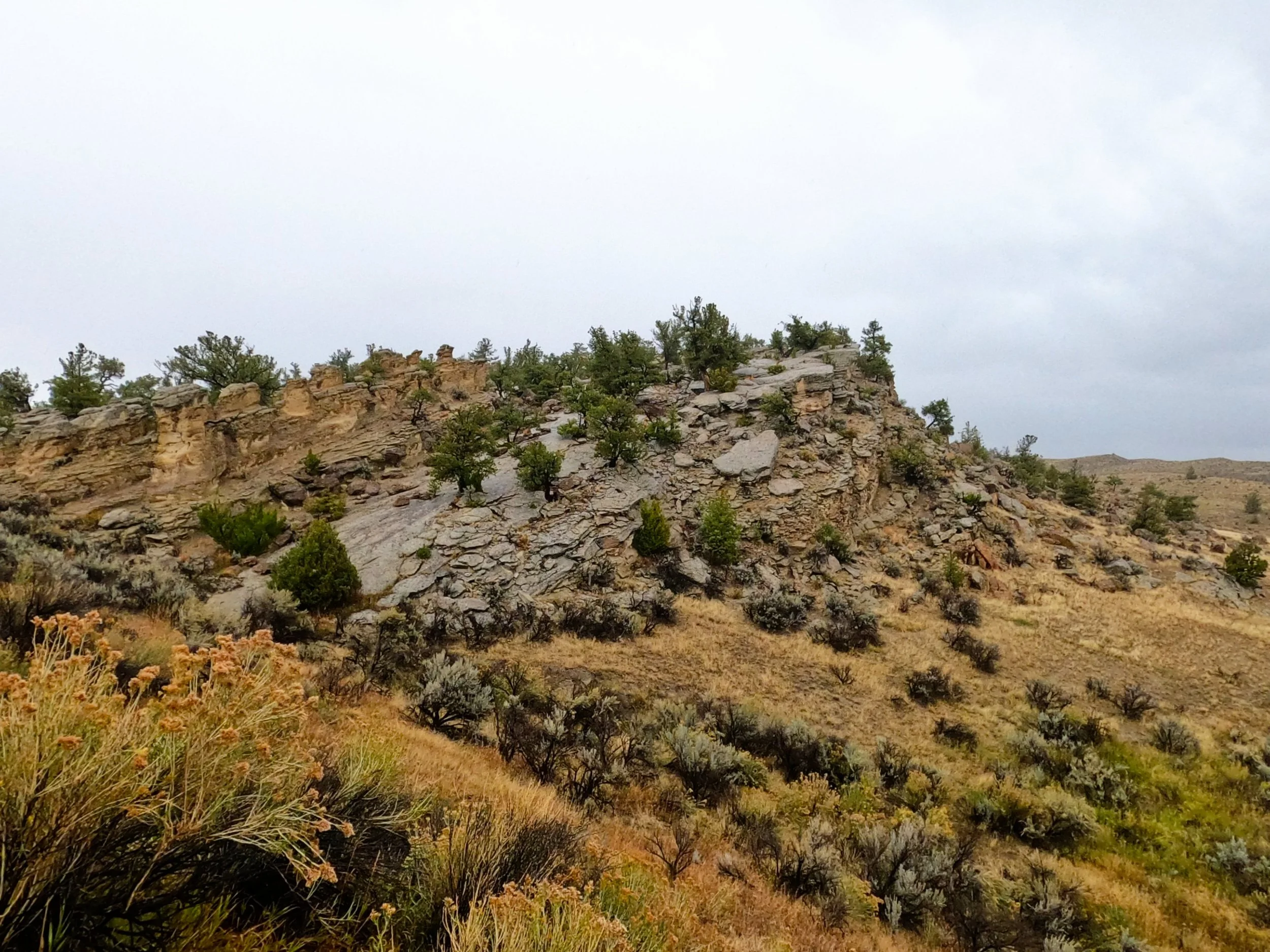
The surrounding rocky landscape, near Legend Rock area
So you made it this far? Good. You still have a healthy attention span! Congrats!
If I made you fascinated, and if you want to visit Legend Rock, it is accessible on a rural side-road, just off of the 120 Highway, North of Thermopolis. A big sign displaying the name of this site is visible from the road, so you will not have a hard time finding directions.
Below is a map from my brochure, for you to save on your phone,
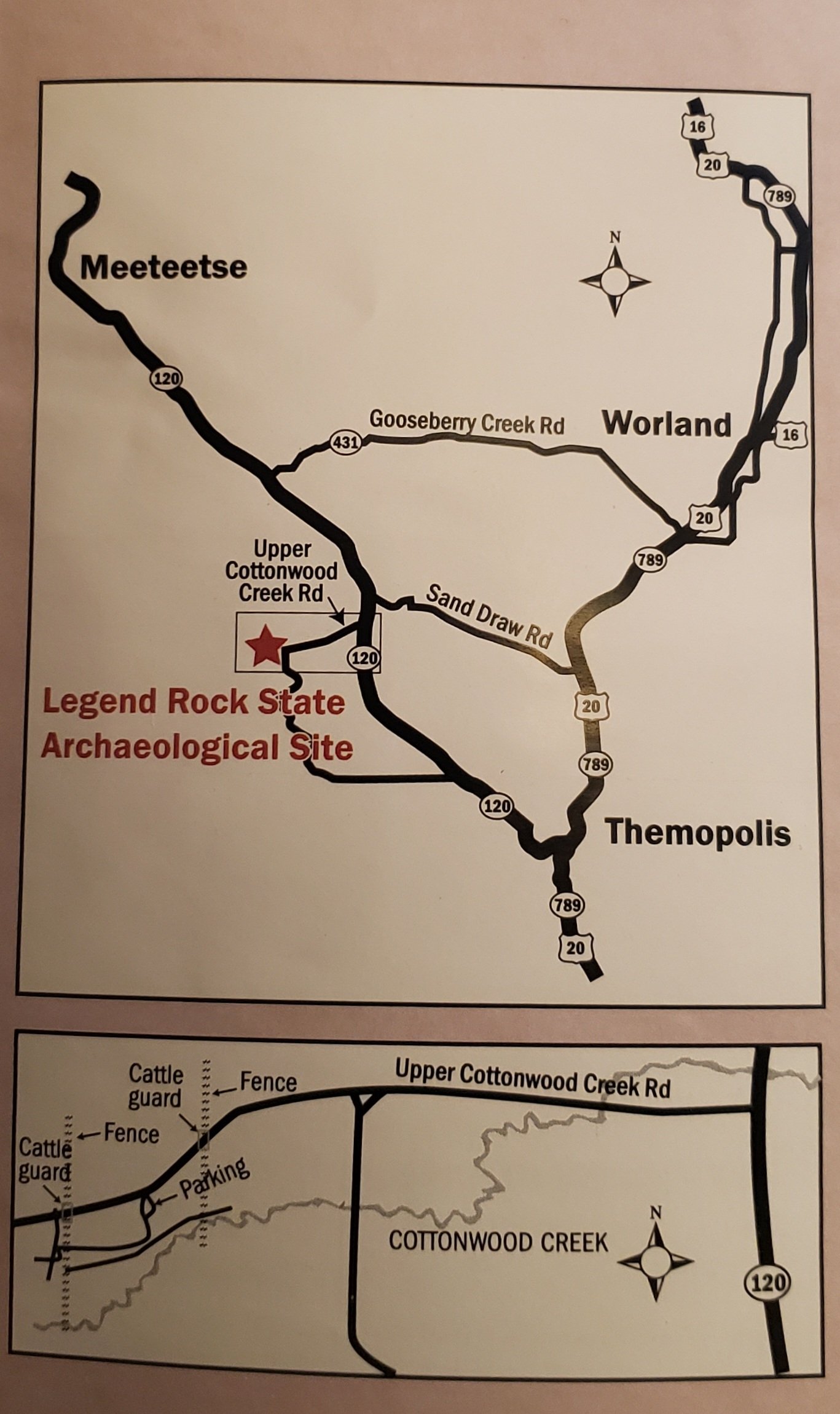
Map to find the site
If you wish to visit from May to September, you can enter the area without a key from the Hot Springs County State Park Office.
From October until late April, you need a key to enter, just like how I did.
The Hot Springs Park staff just take your ID, and then expect you to bring it back within business hours. The address is located at:
51 Highway 20 North Thermopolis, Wyoming 82443(307) 864-2176
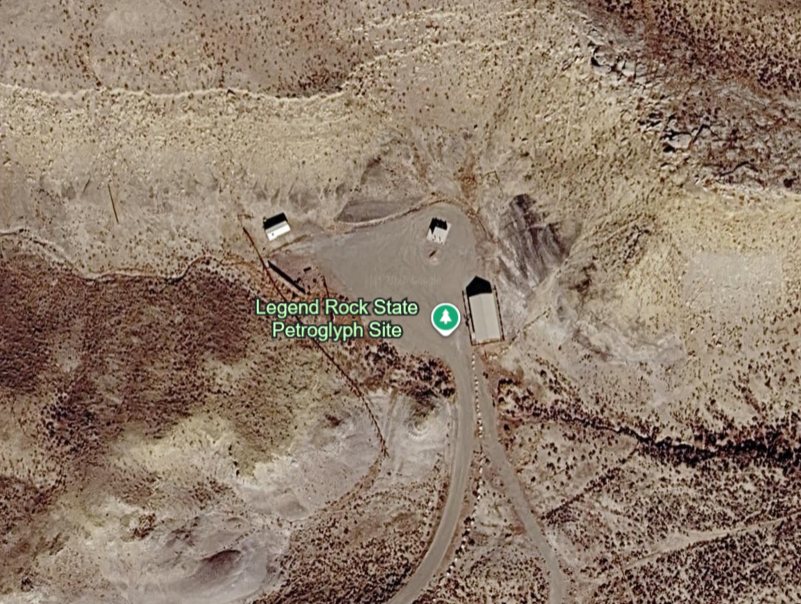
Closer view of the parking area
When you arrive, expect to only see a small visitor’s center (above), with a parking lot and a washroom facility. Very bare bones, nothing modern. Just the trail and the parking area are the only modern amenities here.
Other than that, a large wood fence protects the glyphs from visitors and the cliff. It goes without saying, but it is against the law to touch the cliff, or to disturb the glyphs.
Expect the trail to be a very short hike. The trail is about 0.8 kms (0.5 miles) long, so try to stay for a good hour, and try to take tons of photos, or stay at the picnic area near the visitor’s centre for a nice lunch.
I recommend bringing you telephoto lens, and also bring a sketchbook to draw some of your favourite glyphs, as if you are a real archaeologist!
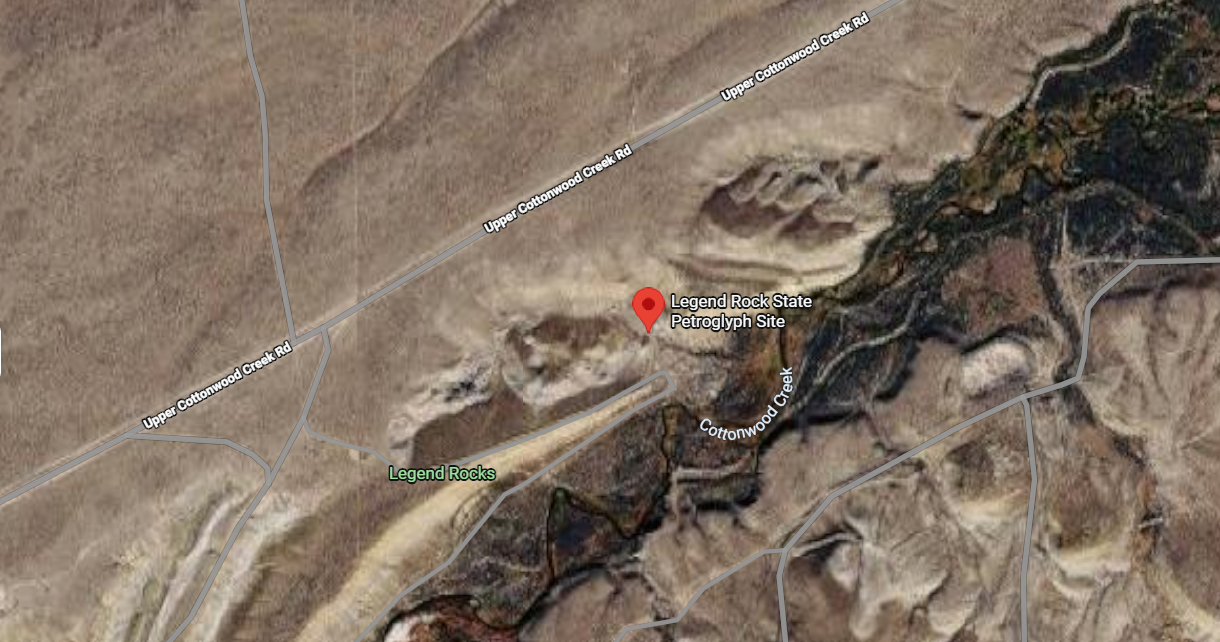
Rough aerial view of the site
