
“It is in our nature to explore, to reach out into the unknown. The only true failure would be not to explore at all”
~Ernest Shackleton
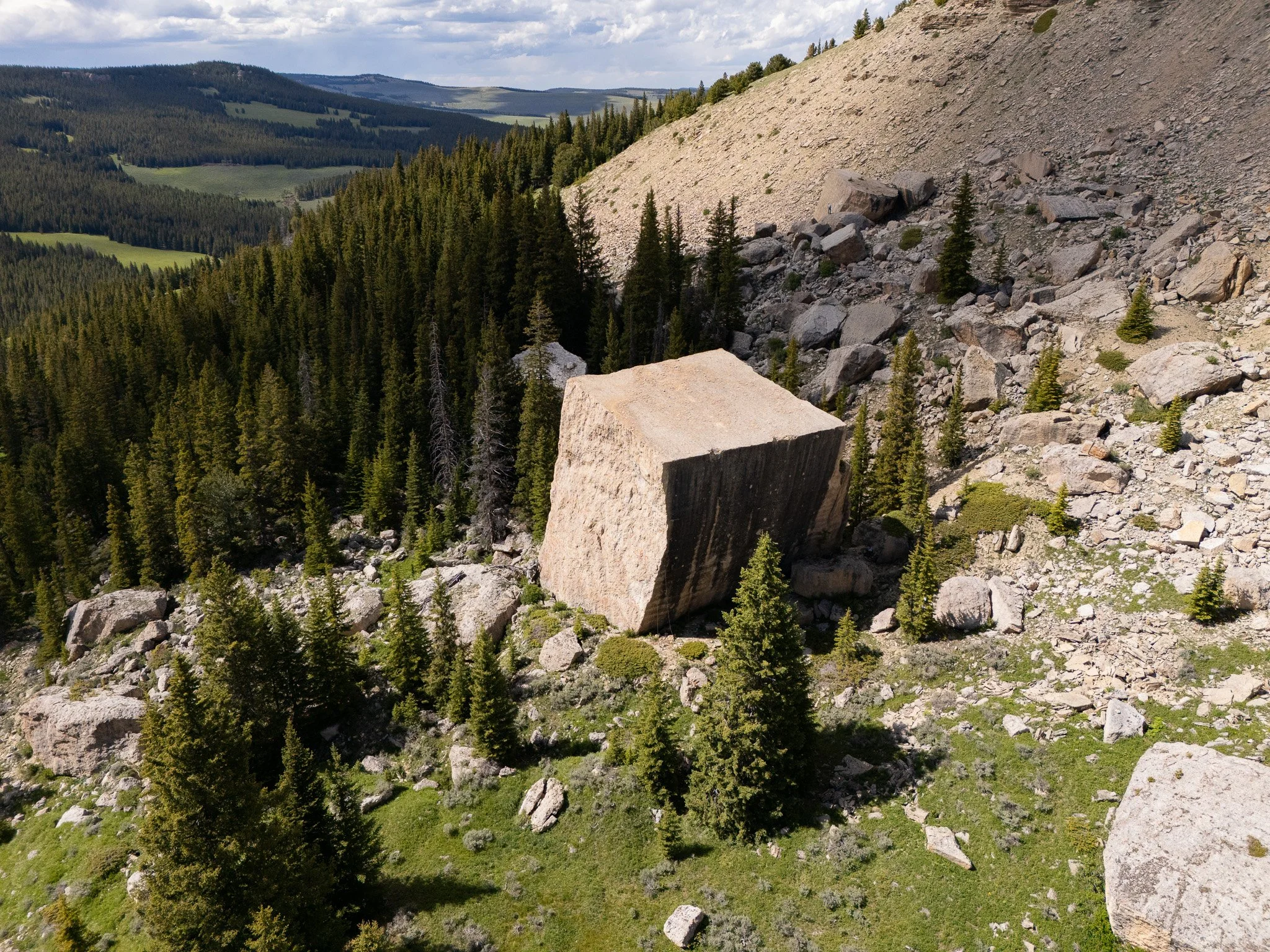
The mysterious “Falling Cube” of Northern Wyoming, taken by me, in July of 2026
Before I begin, I clarify that I am not the first person to discover this bizarre Dolomite Cube.
I am someone who is passionately writing to share my experience, and to add to the knowledge of this site for other future explorers. Hopefully that can be YOU!
I hope that this article can excite you, just like how this spot inspired me in many ways!
A True Anomaly
In November of 2025, shortly after my trip to Wyoming, I stumbled upon a post on Instagram that showed this massive object, which is the subject of this article. A huge stone cube just sitting in the middle of nowhere. The caption was titled something like this:
“Was this mysterious rock proof of an ancient civilization, in Northern Wyoming?”
I was totally perplexed when I saw that post. Upon first glance, it looked out of place, almost carved with intention and a meaning. How can a random cube show up in an obscure location in the mountains, unless humans made this?
So I did what any curious explorer would want to do, which was to dig up as much info as I could and find the location of this anomalous object.
Over the next few days, I obsessively looked online through videos, forums, and good ol’ Google Earth to find the location (which I will keep secret), which was tough because this place is barely covered at all, except for a few videos by some adventure Youtube content creators.
At the time of publishing this article, this place is still relatively unknown.
I was surprised to see that this is found in Wyoming’s Bighorn Mountain Range, which I got to drive through in September of 2025! Unfortunately, I was on my way to Devil’s Tower (Future blog about it coming soon) that day, so I completely missed this hidden gem!
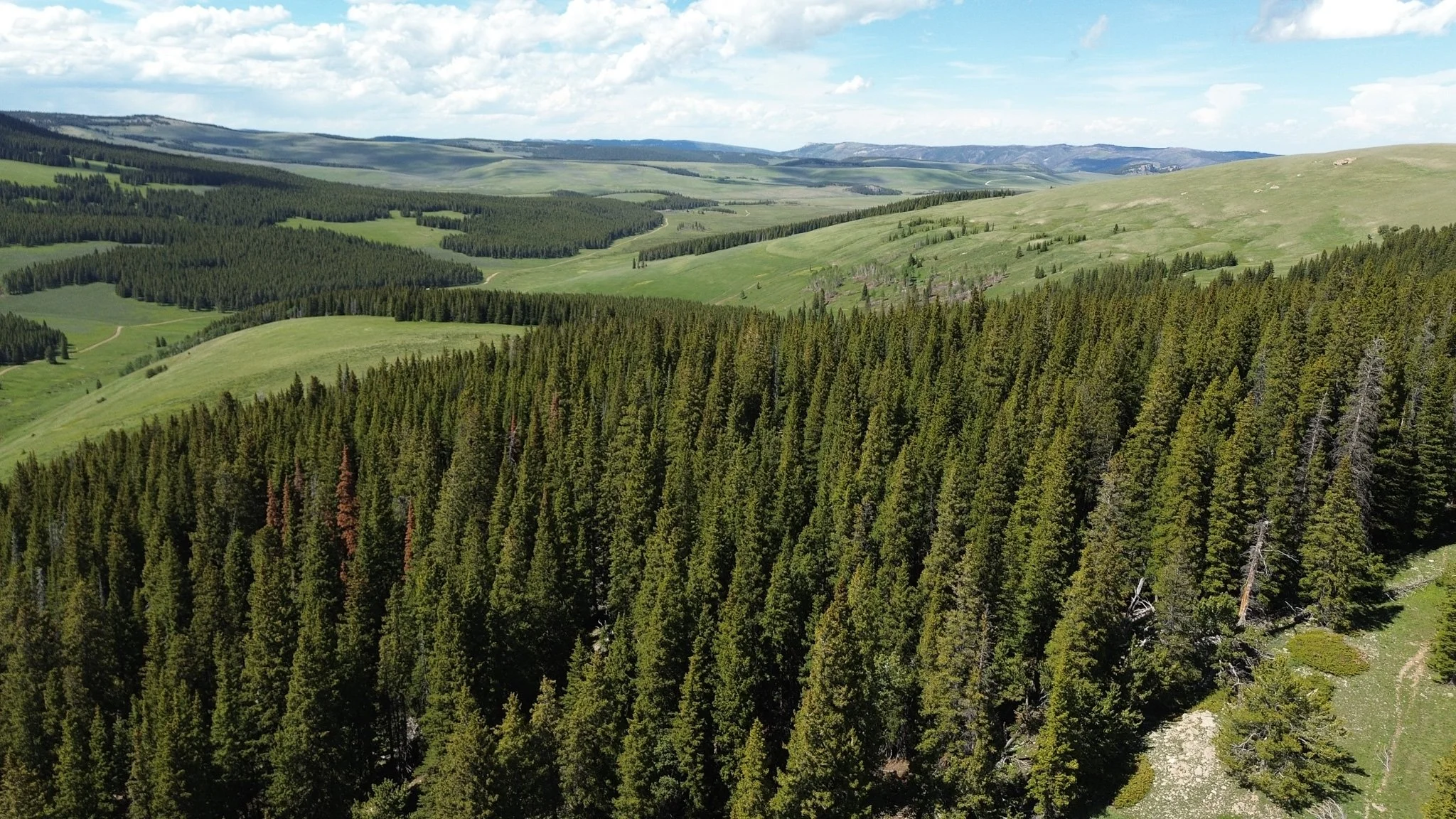
The Bighorn Mountain Range, Northern Wyoming, taken by my drone in July of 2026
This breathtaking mountain range is roughly halfway between Mount Rushmore, in South Dakota, and Yellowstone National Park, in Northeastern Wyoming. Having done that drive myself, I recommend anyone take that drive if you want one of North America’s most scenic drives!
Had I known about it in 2025, I would have jumped at the opportunity to see it in-person, which is exactly what me and my friend did on the July 4th weekend of 2026, just in time for America’s 250th birthday!
What Do We Know About It?
Surprisingly, not much!
Much about the history/context about this cube is not well known, mostly due to its relatively inaccessible location, and because it is poorly documented. One question we will probably never know for sure…is the exact date of when it fell!
Answers about the composition and geology are clearer, but we don’t know much about everything else!
But that is still the exact reason I wanted to find it… because of how genuinely obscure and unknown this is!
How often can you say you went to a place like this? You can’t!
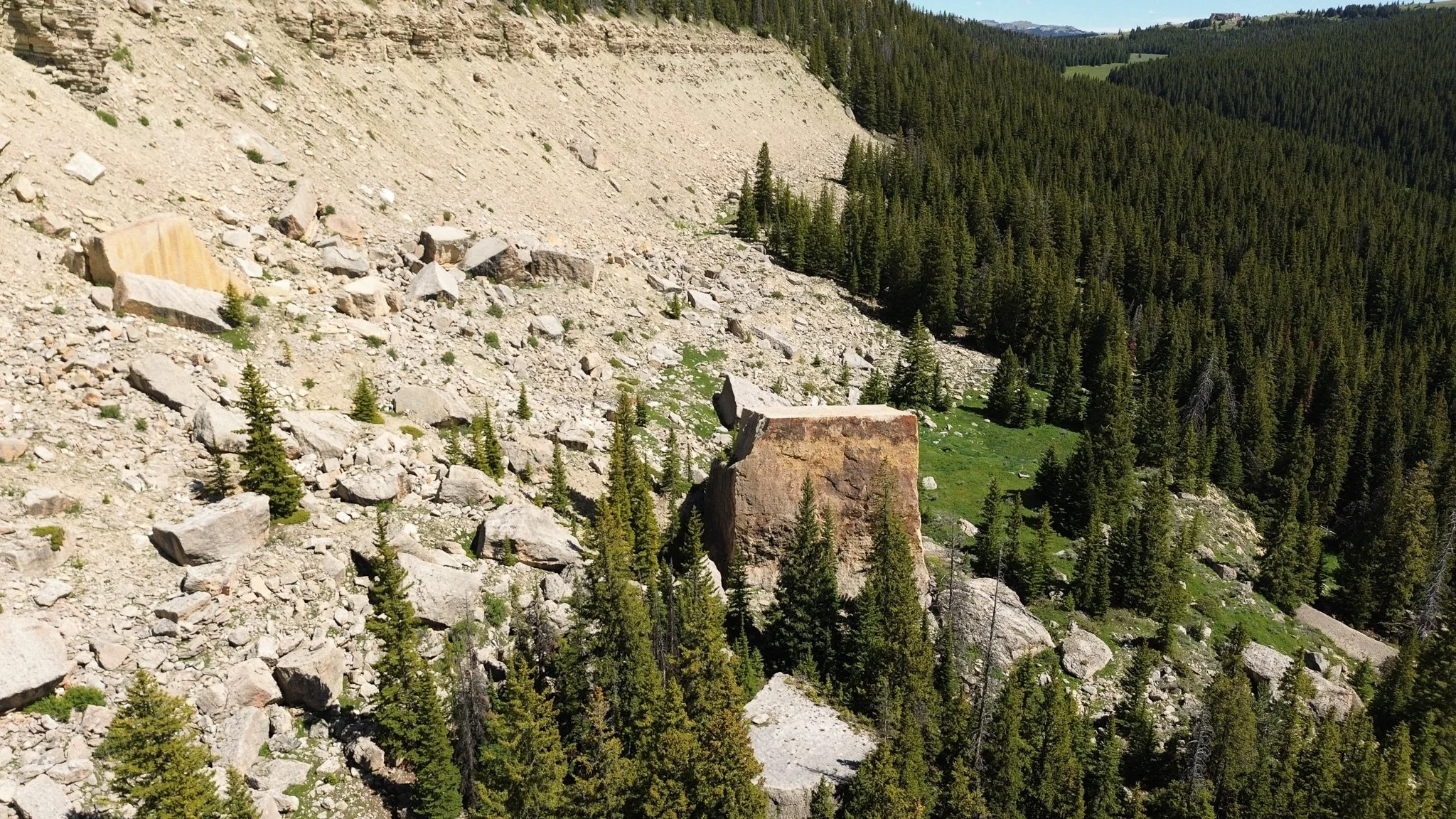
Approaching the cube, looking Northeast, taken by my drone, July of 2026
The Falling Block is composed primarily of Bighorn Dolomite, a very resistant and tough carbonate rock belonging to the Ordovician Bighorn Dolomite, roughly 450 million years old.
On the chemical level, dolomite is made up of Calcium-Magnesium Carbonate— CaMg(CO₃)₂. The Bighorn Dolomite can also contain varying amounts of calcite, silica/chert and other minor impurities.

Chemical structure of Dolomite, courtesy of Google Images
Dolomite has a “breaking” or “cleavage” angle of intersection at approximately 74° to 106° when stressed, which explains the rhombohedral to cuboid-looking composition.
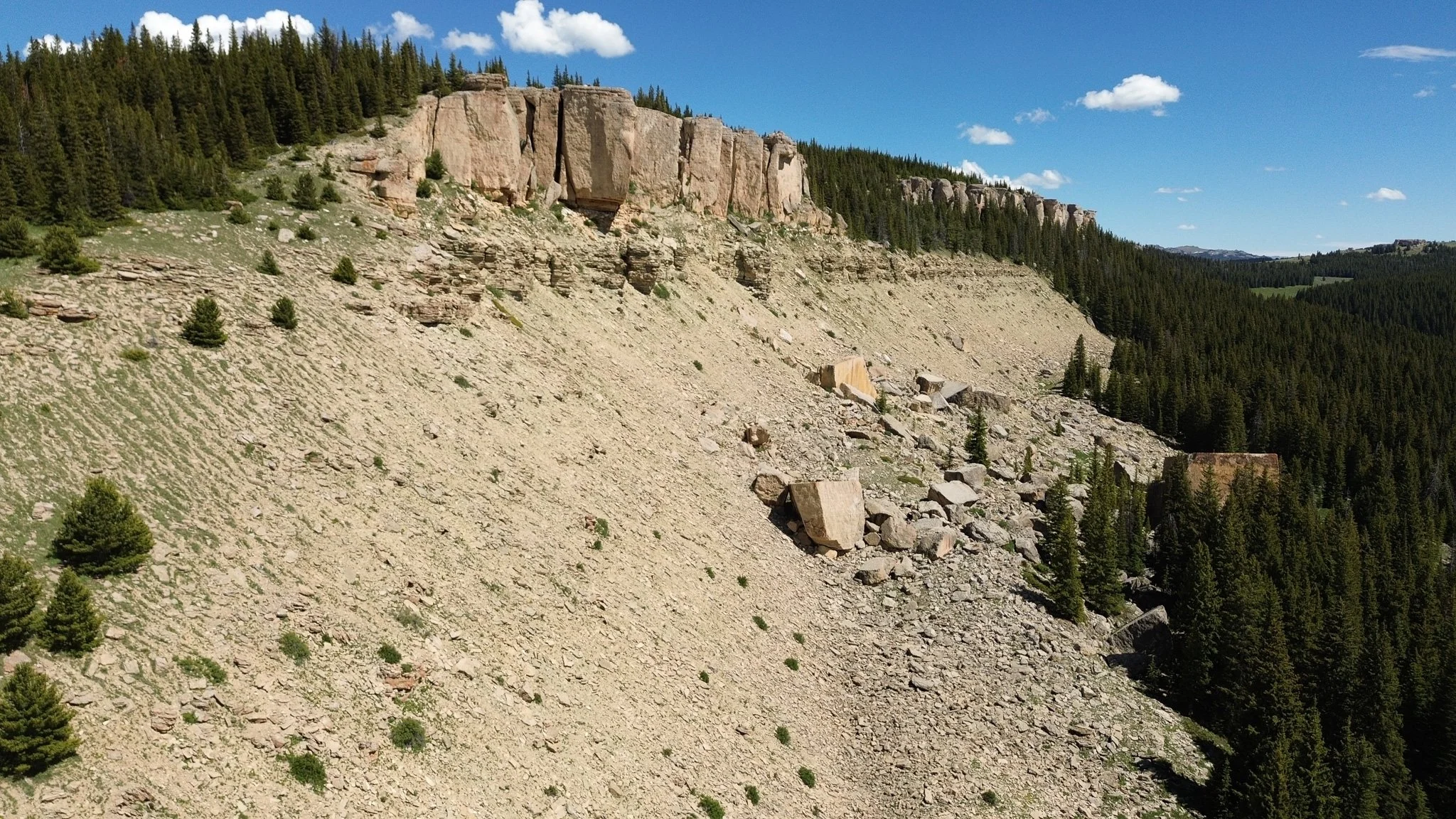
The towering cliffs, where the block fell from, taken from my drone in July of 2026
It is inferred that constant freezing, and thawing of rain and melt-water released the block from its former cliff home, to where it landed
As you can see below, The Bighorn Dolomite was already divided by natural fractures while it was still part of the mountainside above. Over enormous periods of weathering, water entering those fractures—combined with freeze-thaw action, dissolution of carbonate rock, gravity, and erosion—would progressively enlarge the gaps in-between he blocks.
Eventually, one of those joint-bounded masses became mechanically separated from the bedrock. Once the rock underneath or alongside it could no longer support it, gravity did the rest. The mass detached, fell or toppled downslope, and came to rest among the rock debris.
And that's why the block looks almost unnaturally geometric.
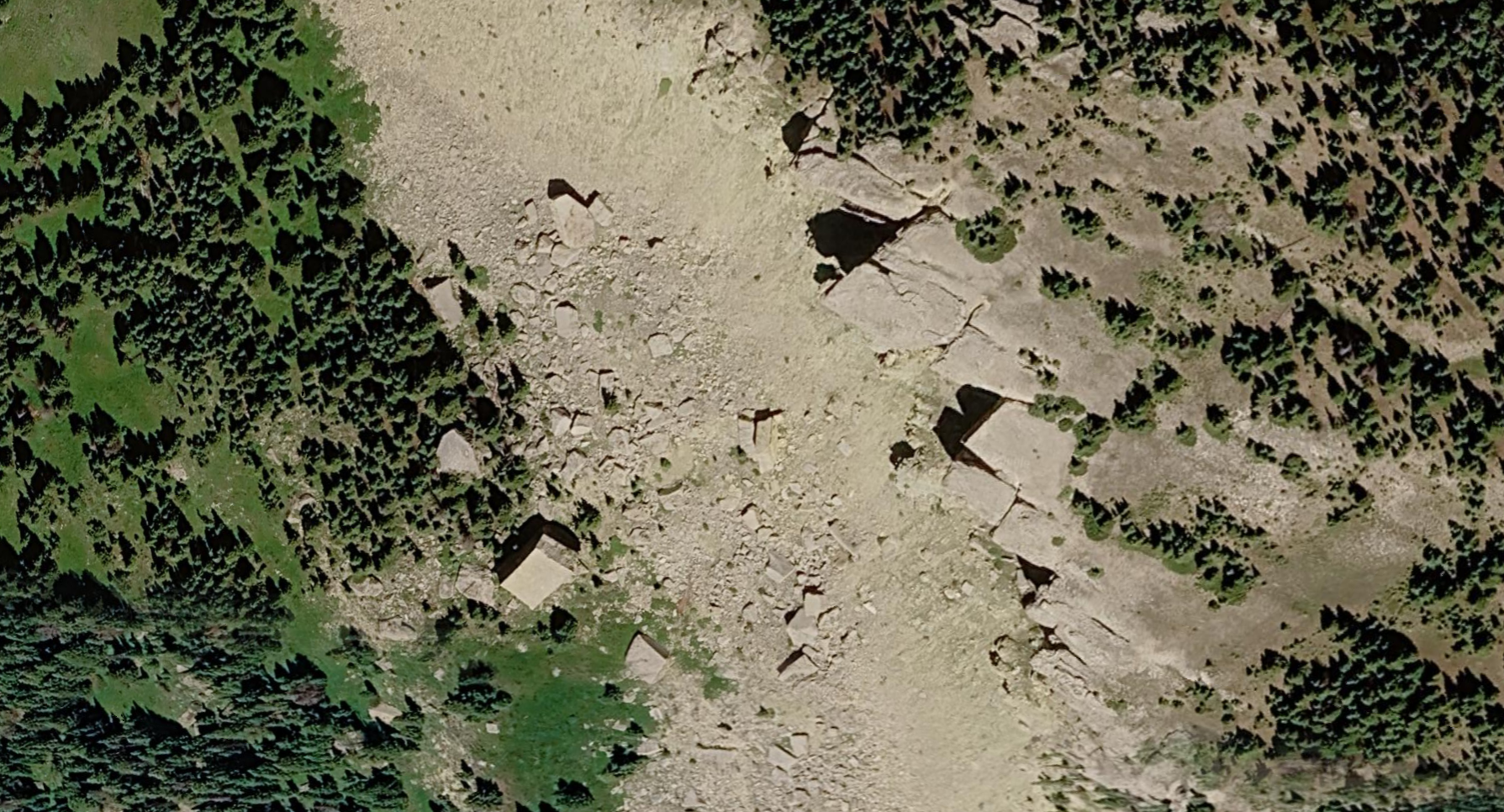
Aerial view from Google Earth
It wasn't carved into a cube after falling. Its approximate shape was already predetermined by fractures before it detached.
You can even see other large angular blocks scattered through the debris field, suggesting that this wasn't an isolated process. The entire slope records repeated periods of rockfall and mass wasting.
Who Discovered This Cube?
This is the part that is somewhat frustrating, but also really cool…
The truth is…we have no idea!
No physical or digital records exist an individual who first “discovered” the cube, but it is probably safe to say this has been known to those who live in the area, and back-country climbers. Recent reporting does emphasize how little we understand about it.
The Bighorn Mountains have an incredibly long and ancient history of human activity. In fact, this range is home to the iconic “Bighorn Medicine Wheel” (future article coming soon)
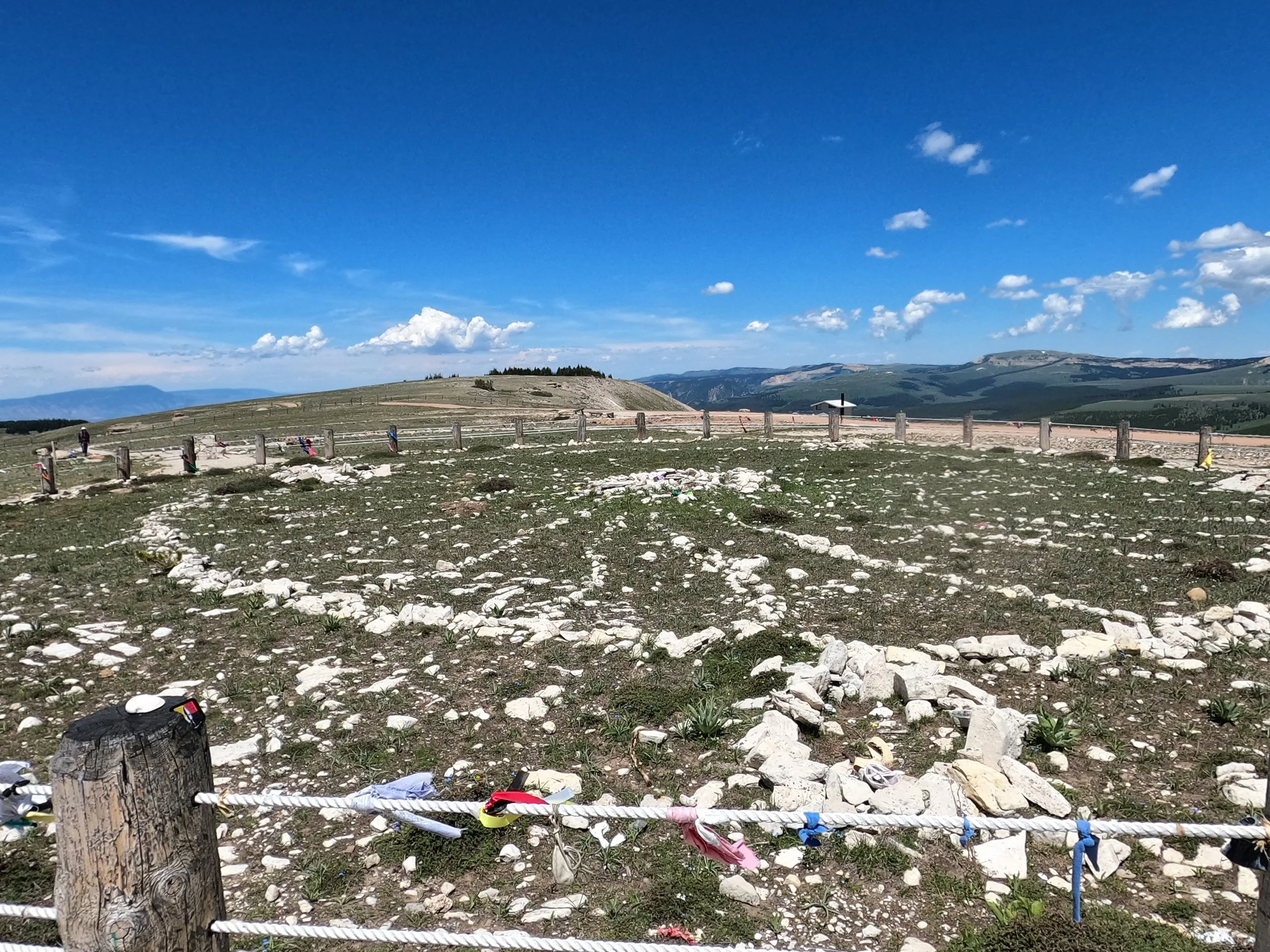
The Bighorn Medicine Wheel, taken from my Gopro, July of 2026
This site has been used as a sacred ceremonial site for the indigenous tribes of America, including the;
Crow (Apsáalooke)
Blackfoot
Eastern Shoshone
Northern Cheyenne
Arapaho
Lakota/Sioux
and other Native American Plains tribes, for possibly over 7,000 years! With many tribes having walked through this area for untold millennia, it is likely (hard to say) that the block could have been seen by groups of ancient peoples from this region, but we have no way to prove it.
Interestingly enough, the block happens to be a spot for rock climbers, and even has climbing bolts and established routes!
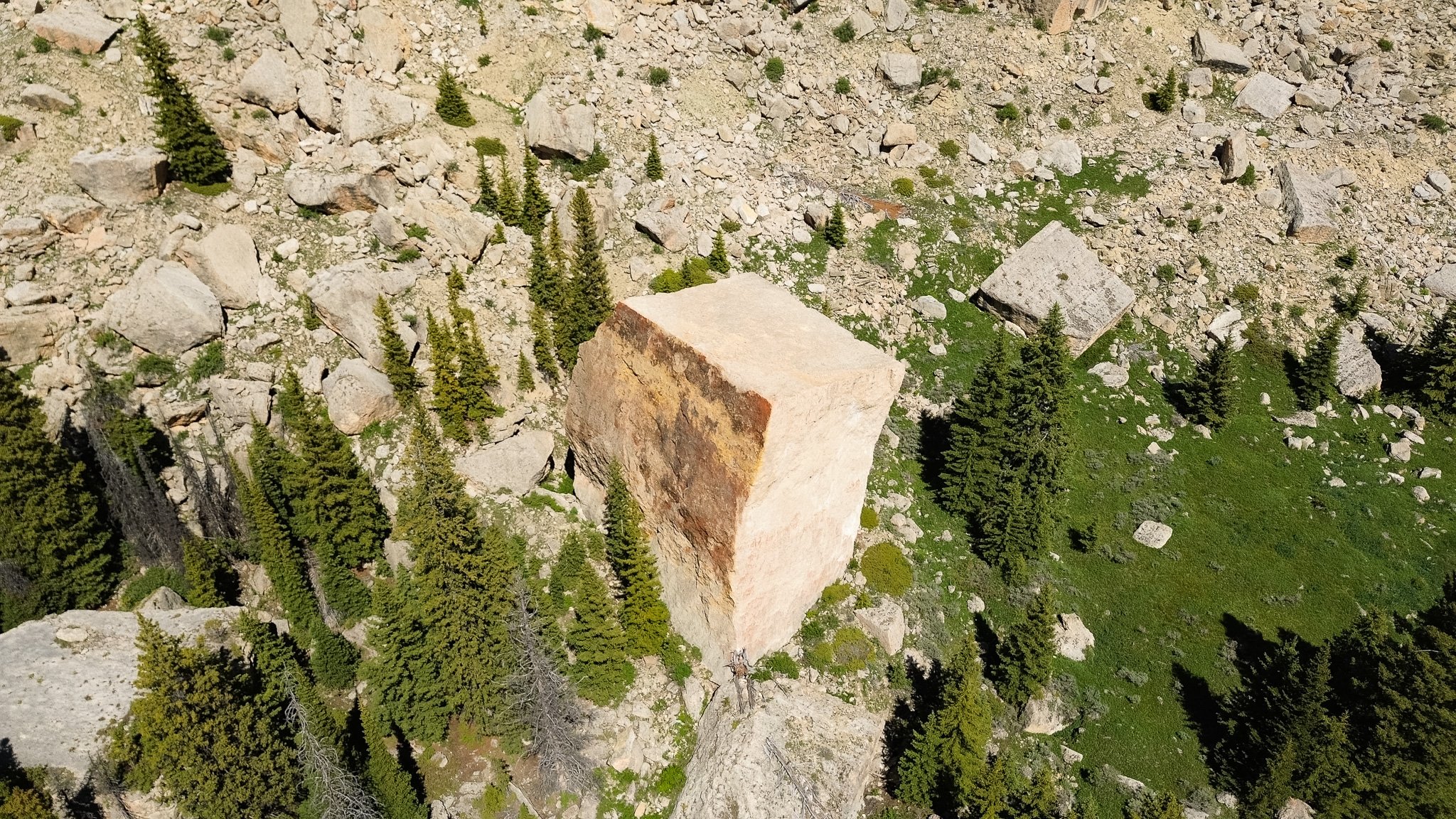
Above view of the cube, and debris, taken by my drone, July of 2026
You read that right! There are established climbing routes on Falling Block, and photographs clearly show climbing hardware on the block.
One documented route is called Martini Action, described as a Paul Piana addition from the year 2000! A climbing discussion from 2019 identifies Piana's route and notes that several bolted routes existed on the cube. Take a look below!
So bolted climbing was occurring on Falling Block by at least 2000.
What I can’t reliably establish is exactly when the very first bolts were installed, it's possible that routes existed before Piana's 2000 addition, and the wording "addition" can suggest that climbing development at Falling Block may predate it.
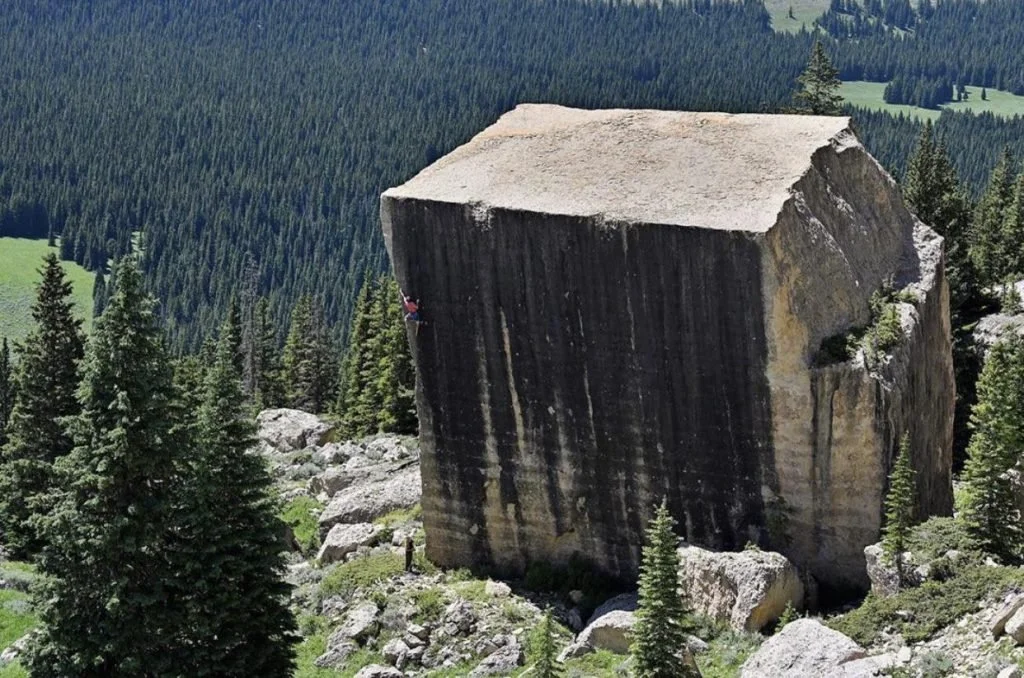
Photo courtesy of “AK. Fisher” from the “Megalithic Portal,” date unknown
The Argument For Ancient Human Involvement
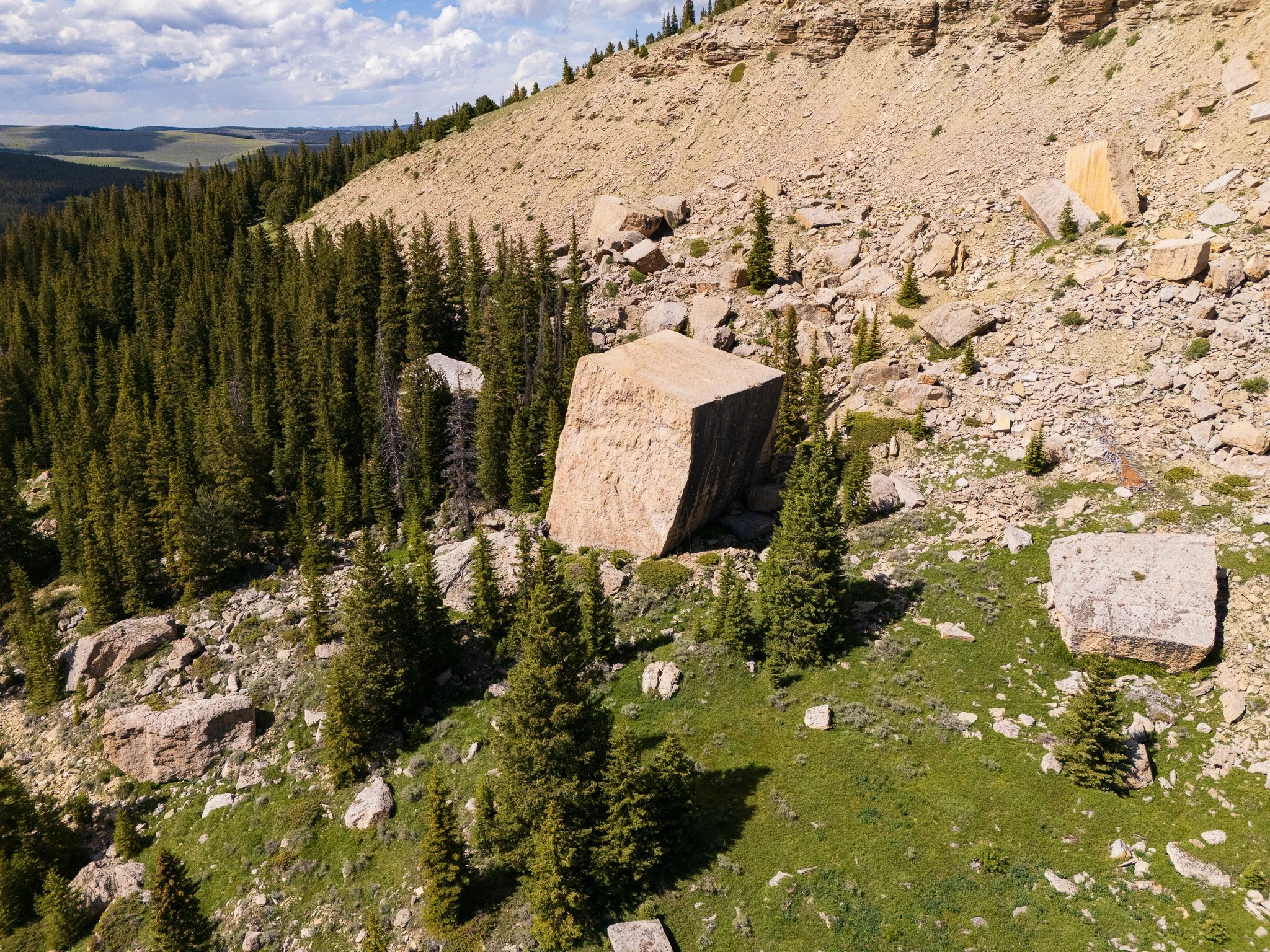
Side view of the cube, and debris, taken by my drone, July of 2026
To reference my first few paragraphs, I came to know about this stunning monolith from a post that circulated on social media. It suggested that “lost ancient human technology” carved this huge block, and that this was not a result of erosive forces.
Part of the allure that drew me in…was ironically stuff like that! I couldn’t help BUT ask some questions, which fueled the fire of discovery in me!
Here are some of the points that suggests this was worked by humans:
Its geometric shape: It can look more like a deliberately shaped megalith than ordinary debris
The contrast with surrounding rubble: Much of the debris surrounding it consists of irregular fragments, whereas the Falling Block remained an enormous coherent mass.
Flat surfaces. Some faces—especially the prominent upper surface—look unusually planar at a distance and could be potentially “worked” or intentionally flattened
The apparent squareness of some corners: From certain viewpoints, some edges appear close to perpendicular
Distance to the Bighorn Medicine Wheel: Because the block lies in the broader Bighorn Mountain region associated with thousands of years of Indigenous presence, the block had some cultural significance
“Scoop” Marks: Material being removed incrementally rather than a surface simply splitting cleanly (see the image below)
In Closing
Is this a creation of a lost ancient civilization?
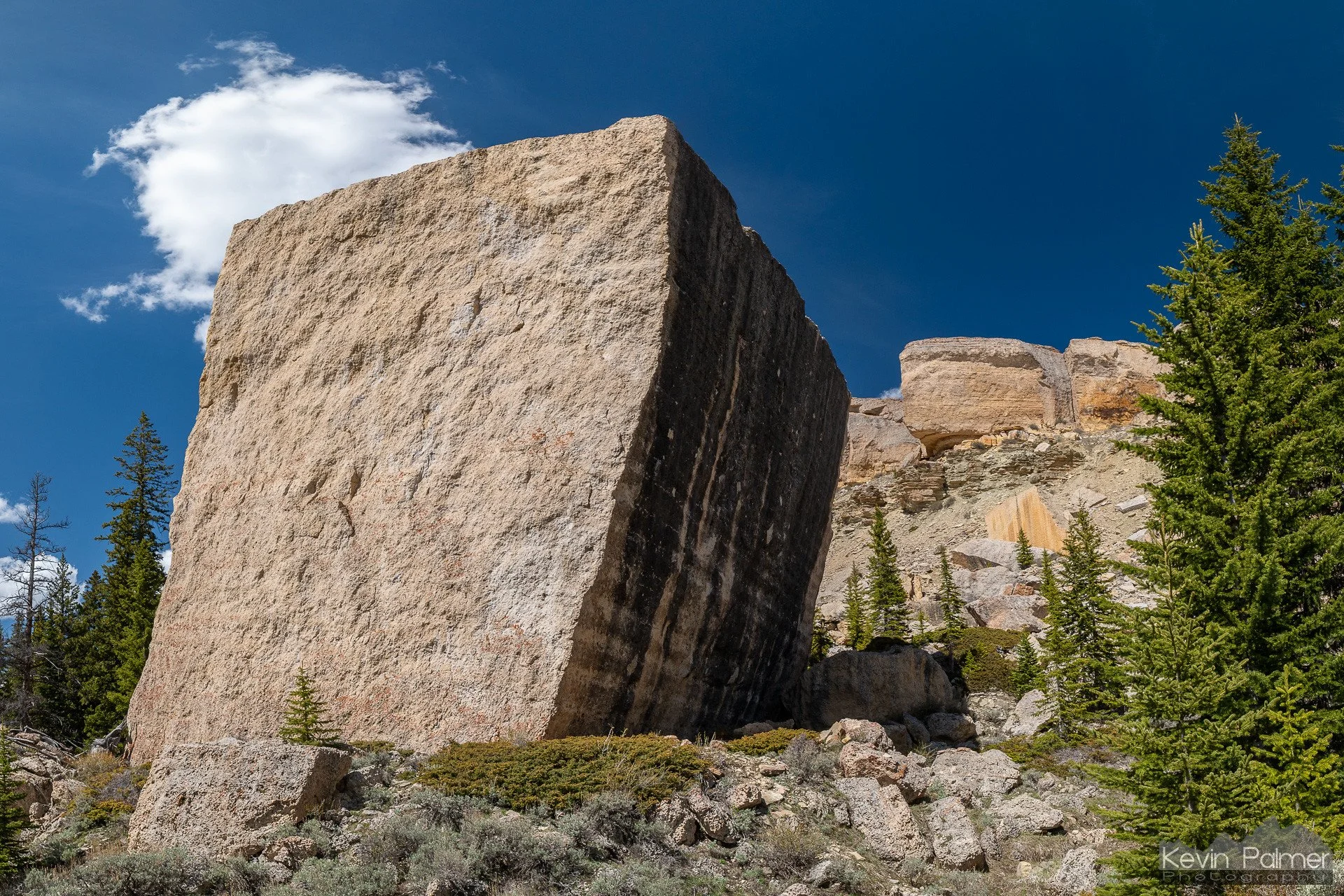
Image courtesy of Kevin Palmer, on Flickr
NO…
At least to my eyes, I could not see any evidence that points out to anything human-made, except for the presence of bolts from rock climbers.
As much as I would love to entertain the thought of this being carved by human hands, this monolith is not the result of human craftsmanship…and was the result of natural erosion. Having hiked up to this site really makes you see how this object came to be, and it puts the history into perspective. You might not otherwise know until you set foot in some of these places
I can understand why some people might wonder if something like this was made by humans. The shape is almost a perfect cube, or perhaps almost resembles a rhombus in some angles.
Shapes like this are not commonly found in nature, and look incredibly out of place, especially when it is in a remote spot in the middle of nowhere! Not to mention, a state that has the lowest population out of any state in the Lower 48!
So many questions, yet so few answers…that’s what makes this mystery so compelling!
Lastly, make sure you pack lots of water and nutrition with you, and please do not go on a hot summer day, unlike me and my friend! You can thank me later!
Regards,
Eric
