
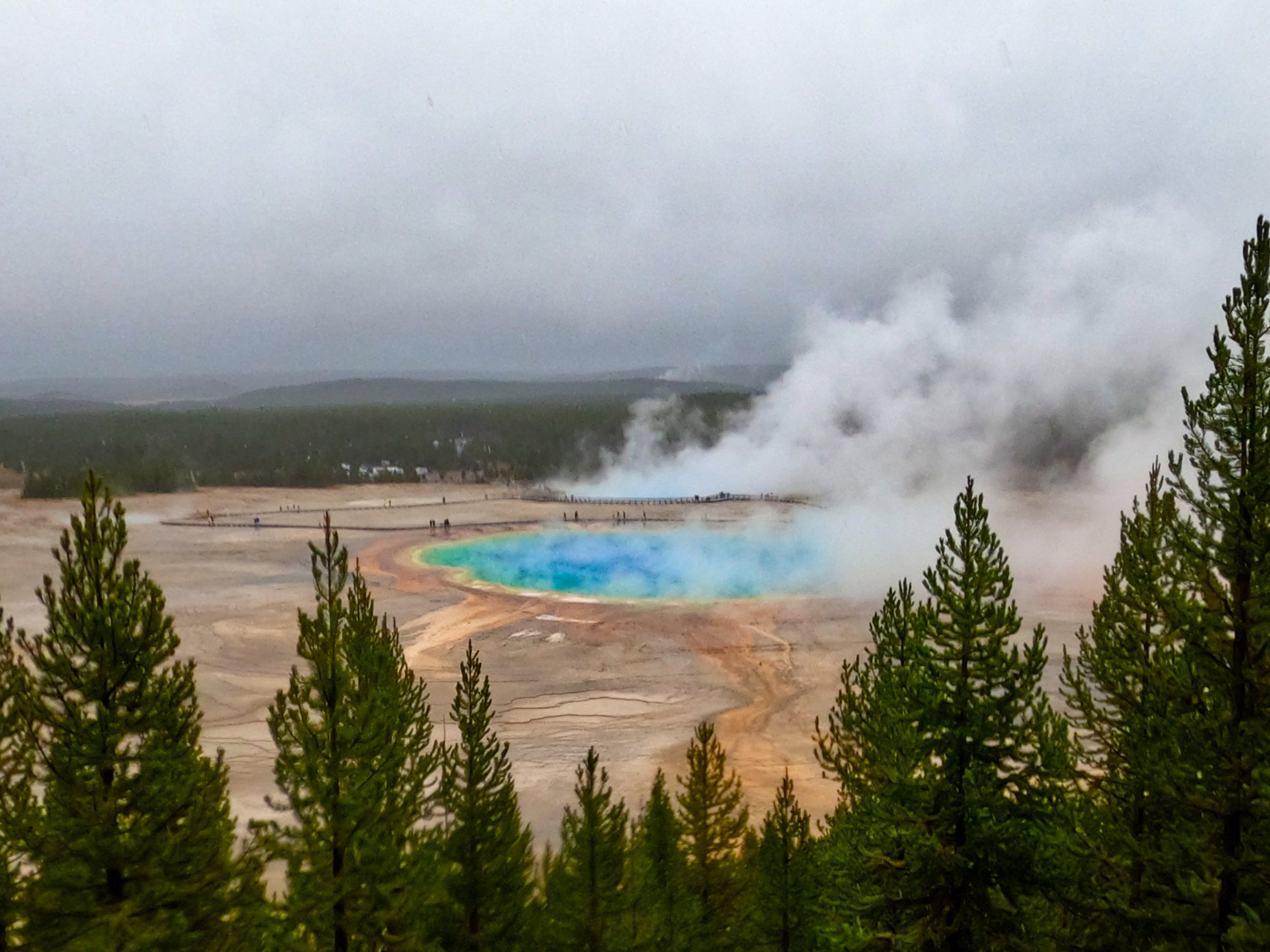
View from the Grand Prismatic Spring Overlook, taken by me, Oct 2025
"The geysers, the extraordinary hot springs, the lakes, the mountains, the canyons, and cataracts unite to make this region something not wholly to be paralleled elsewhere on the globe" ~ Theodore Roosevelt, 1903
With over 10,000 hydrothermal features, very few places on Planet Earth come close to rivalling the majesty and otherworldly beauty that is found only in Yellowstone National Park.
For reference, the world’s very first National Park, amasses a 2.2 million acre (8,983 square kilometer) park boundary, which roughly rivals the size of Hawaii’s ‘Big Island’
Big Island: 10,432 km²
Yellowstone: 8,983 km²
→ Yellowstone is 86% the size of the Big Island.
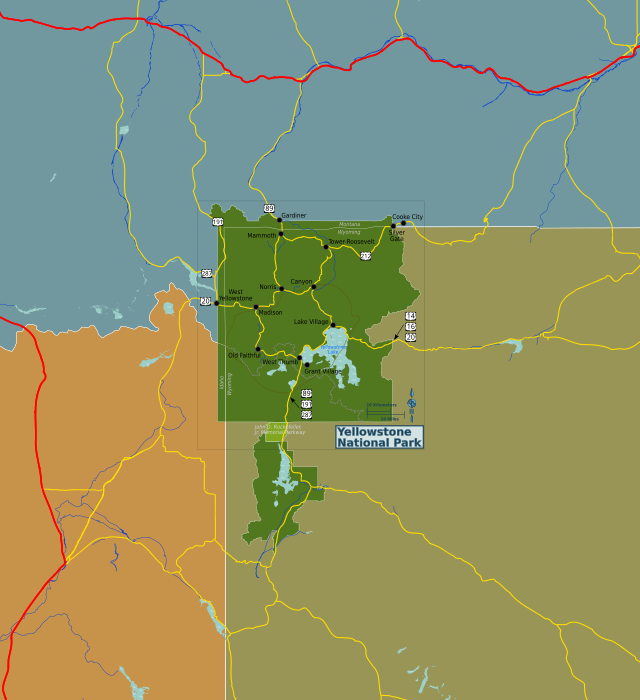
Map of Yellowstone, with neighboring states, Montana (North), and Idaho (West)
Interestingly, most of Planet Earth’s hydrothermal features are only found here, in the mountains of Northwestern Wyoming, which makes Yellowstone a truly unique treasure to visit and explore! The park contains over some 500+ geysers, and thousands of…
Fumaroles (Openings or vents in the Earth’s surface)
Hot Springs
Mud-pots
Steam Vents
…and is home to America’s largest hot spring, and the world’s third-largest hot spring, which is the subject of today’s fascinating deep-dive, the ‘Grand-Prismatic Hot Spring!’
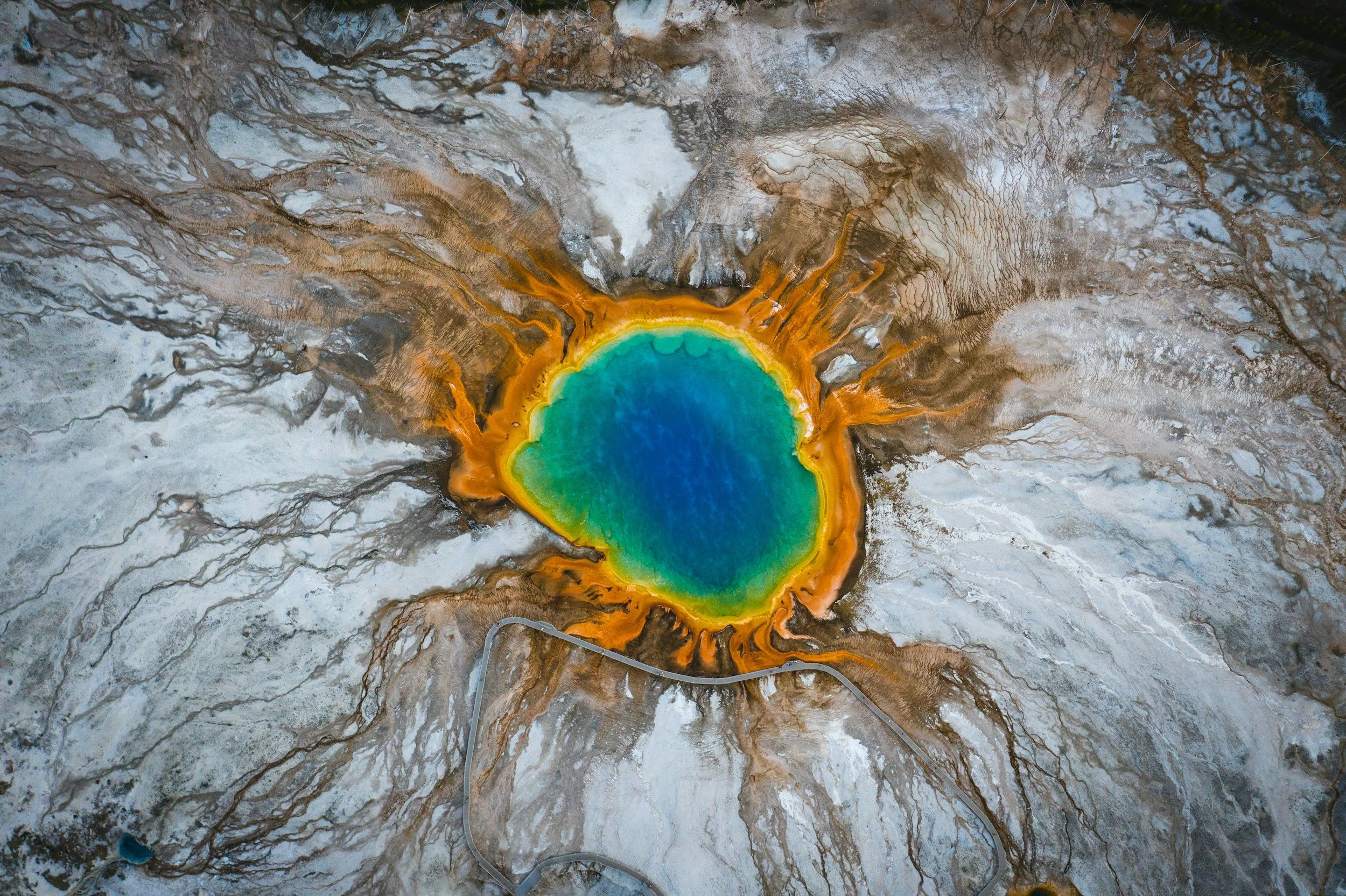
Aerial image, from above, (Courtesy of Unsplash)
The Grand Prismatic Spring is one of the most astonishing sights in the whole park—an enormous pool of steaming, brilliant color that looks almost unreal against the rugged landscape. From above, it resembles a living eye set into the Earth: a deep, glowing blue center surrounded by rings of green, yellow, orange, and fiery red. These colors aren’t just beautiful—because they’re literally alive, and thriving...
Formed over thousands of years, it sits on top of a massive system of heat, pressure, and volcanic activity that makes Yellowstone one of the most geologically active places on Earth.
If you have not already witnessed this breath-taking spring, either from books, magazines, or online, you must be living under a rock! There is quite nothing else like this spring on Planet Earth!
Upon return to my home-town, it amazed me to hear that almost nobody knew of this place! If this is your first time learning of this special oddity, then hopefully this article is for you!
Nature’s Paint Palette
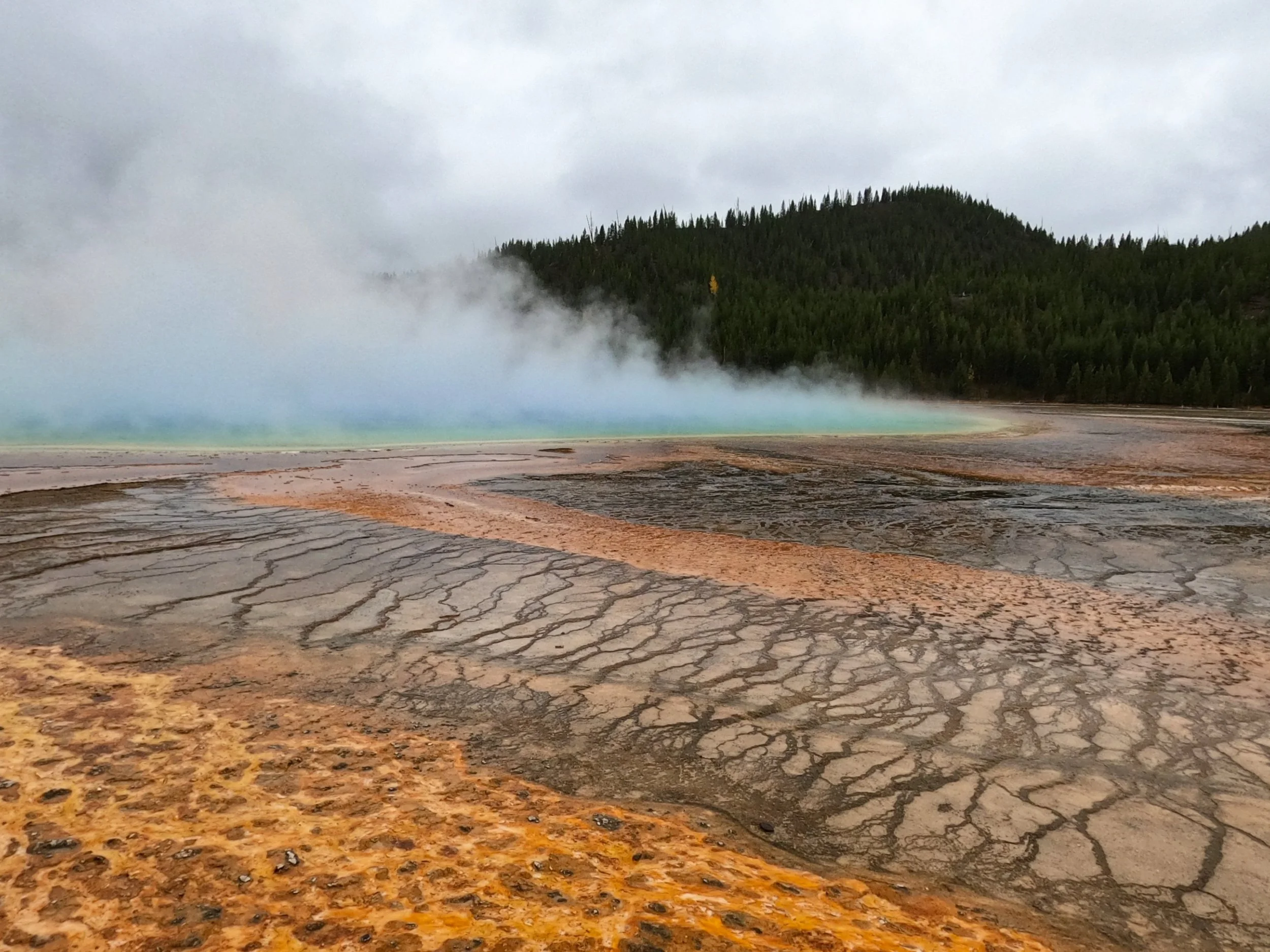
Above- An up-close view of the spring’s vibrant colors, viewed from the boardwalk (Taken by myself, Oct 2025)
So…how the heck does the spring get is colors?
Bacteria
Yup…
Bacteria. But it’s not as gross as you may think…let me explain
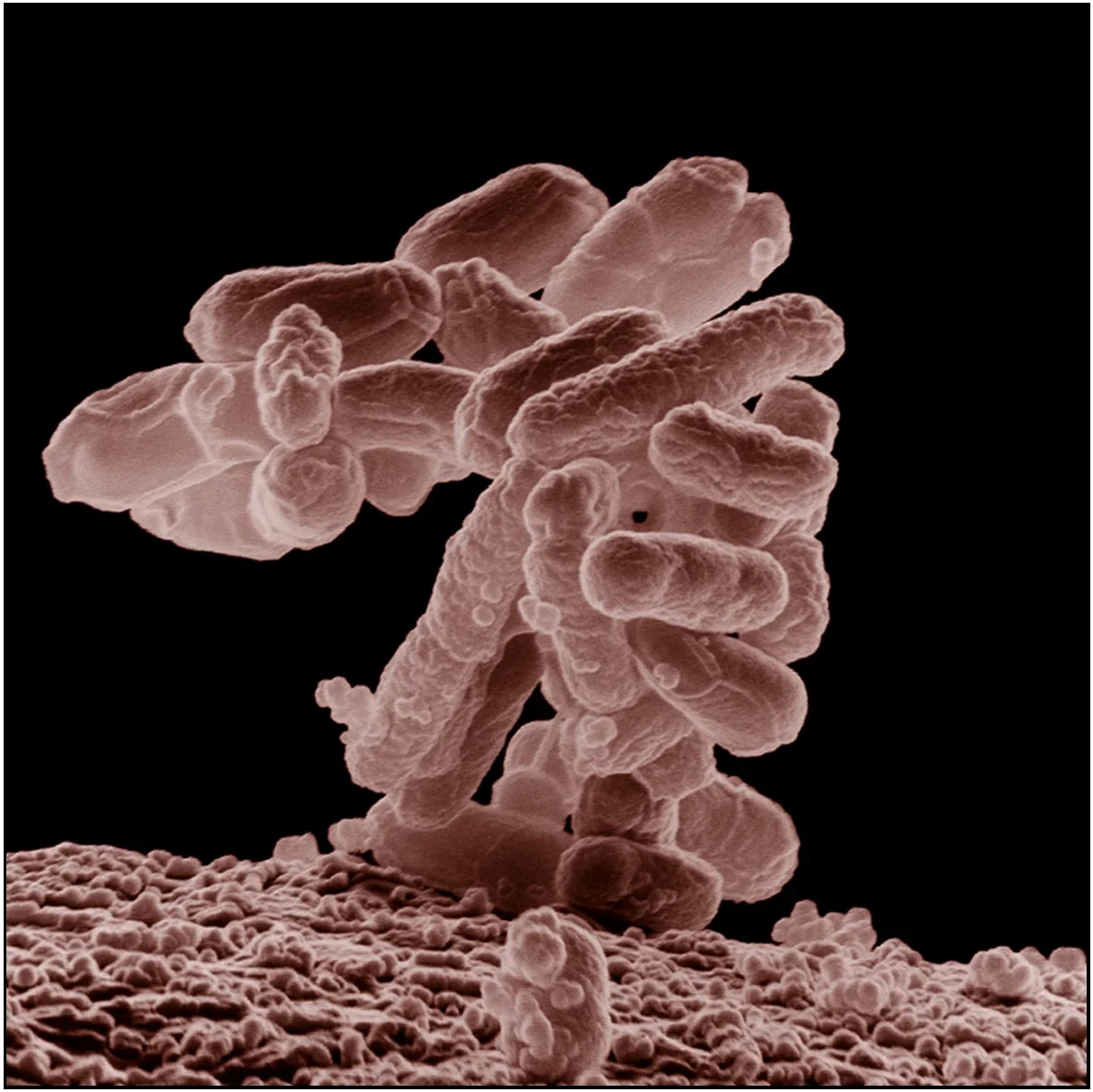
A Thermophile under an electron microscope, courtesy of NPS
‘Thermophiles,’ which literally translate to “Heat-loving” from Greek, are microbial communities, that thrive in different temperatures, which create the distinct bands of color that change with the seasons and with subtle shifts in heat found in Yellowstone. They are derived from the aptly-named family of “Extremophiles,” which (you guessed it) are able to withstand some of the most dangerous conditions on our planet, even in deep hydrothermal vents, found at the bottom of volcanic ocean vents. Pretty extreme, eh?
They are known to be biologically dominant bacteria, and even make researchers question what the limits of life can be on Earth, and even what extraterrestrial life could look like in hostile environments across the reaches of space.
They are able to thrive in environments ranging from 30°C up to nearly boiling, using specialized proteins and heat-stable enzymes that remain functional at extreme temperatures. Instead of breaking down, their cellular mechanisms are actually optimized for heat, allowing them to photosynthesize, metabolize minerals, and reproduce in conditions that seem inhospitable.
Though Thermophiles are most famously found in hot springs, they can also be found in the breakdown of biological matter in the composting process.
In these environments, Temperatures can range from:
Lower than 30°C (86°F) Brown
30°-40°C (86°-104°F) Red/Iron
40°-50°C (104°-122°F) Orange
50°-60°C (122°-140°F) Yellow
60°-70°C (140°-158°F) Green
70°-90°C (158°-194°F) Very sparse in microbial life, almost inhospitable
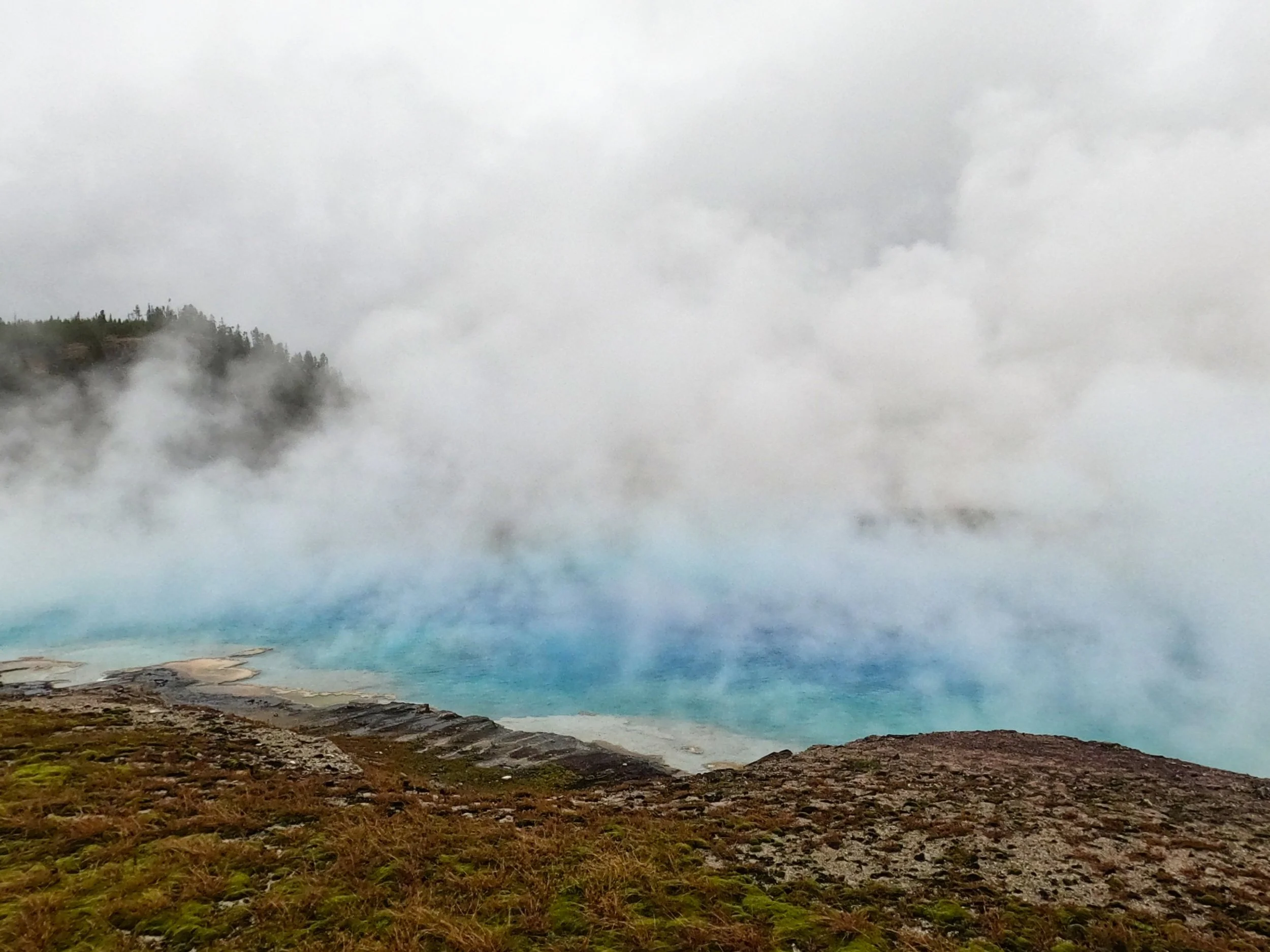
The dormant Excelsior geyser crater, next to the Grand Prismatic Spring for reference. See the extreme temperatures with the blue pigments in its harsh, bubbling water
At the hottest center of the spring—often above 70°C—almost no life can survive, which results in clear water that scatters blue light. As temperatures fall just a few degrees, highly specialized cyanobacteria and phototrophic microbes begin to colonize the water. These organisms contain a mix of pigments such as chlorophyll, carotenoids, and phycobilins. Warmer conditions favor green tones from chlorophyll. As the water cools further, diverse microbial communities group together to form more pigments and iron-rich minerals, creating deep reds and rust colors. These interlocking communities form a microbial tapestry shaped by competition, sunlight, mineral content, and thermal gradients.
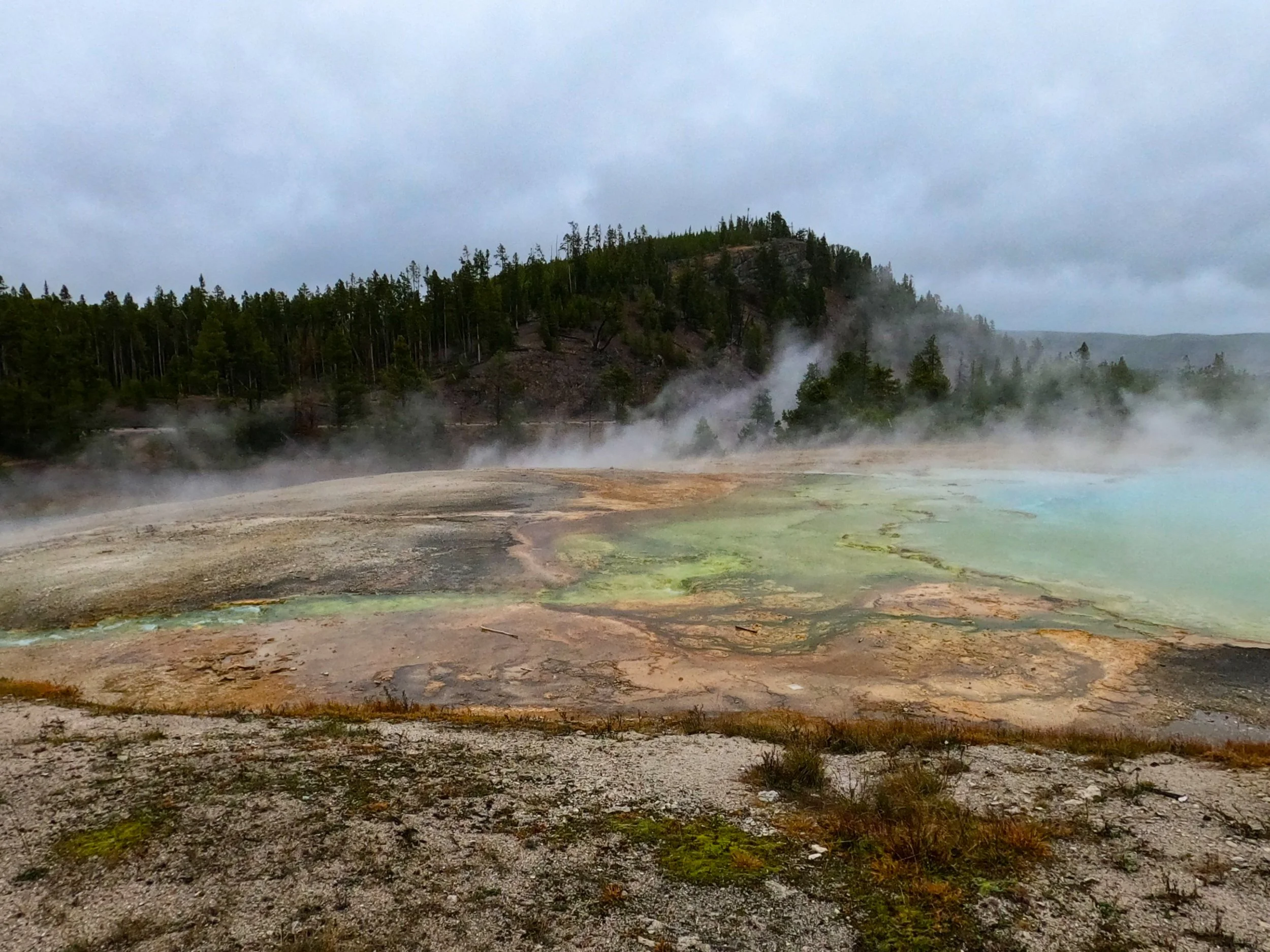
The edge of the Excelsior Geyser. See the drop in temperature that happens only at a short, almost inconsequential distance away from each spot
Travellers Notes + Extras
Would I recommend this place? Absolutely! Without a doubt, this had to be the most exciting place that I have visited in the park, so far!
For the un-initiated, be ready to hear nothing but bellowing water and raging steam, and the stench of rotten eggs. Most of the Geyser Basin of Yellowstone smells like rotten eggs, due to the constant volcanic activity happening underground, thanks to the Sulfur from the underground vents. It is not the most welcoming odor, but you will (hopefully) get used to it.
I did, unfortunately, go on a very rainy day in early October of 2025…which did turn into a snowy late afternoon. My hiking shoes were water-logged by the end of the day, but that did not matter to me! I was not going to miss this opportunity to witness one of the world’s most visually enigmatic features that you can only see here! Though I wish I had sunshine, I was pleasantly surprised by how vibrant the colors of the Geysers and springs looked, even with an overcast day. You will not miss anything if the sun does not show!
Be prepared for tons of tourists, and watch out for crowds on the boardwalk. I must have come on one of the last ‘good weather’ days before Wyoming gets hit by snow, so I can imagine this is why I felt like I was in a can of sardines!
In addition, be ready to circle around the parking lot for a very uncomfortable amount of time when you arrive at the boardwalk for the springs. If you thought the local parking lot at Costco was horrible, this is going to make it look like Child’s play! So keep your head on a swivel at all times!
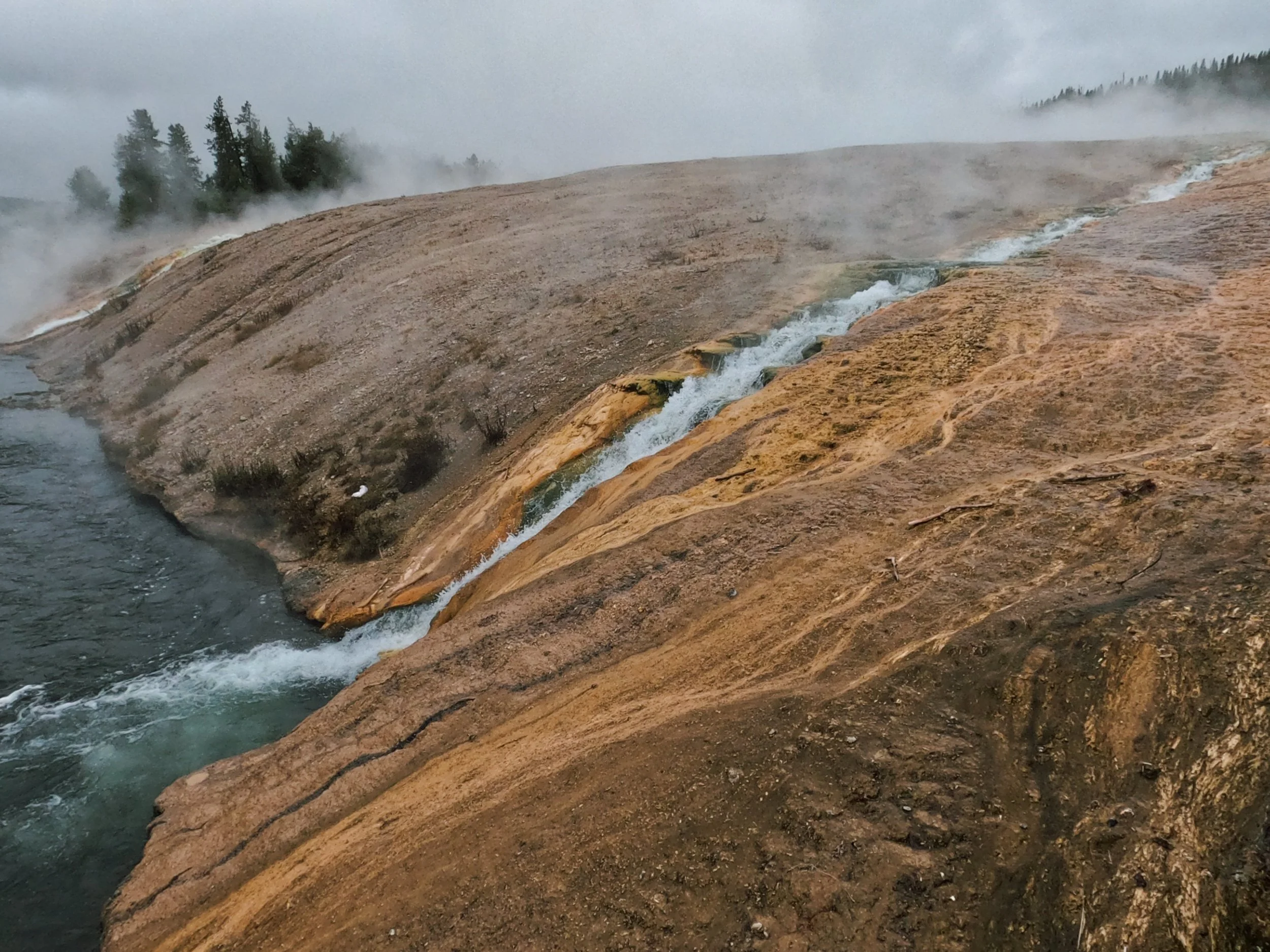
A small waterfall, flowing from the top of the springs plateau. A welcoming sight to the springs when you enter. Taken by me
In the vicinity of the Grand Prismatic Spring, you will also be greeted by two other smaller pools along the boardwalk, that deserve your attention, below.
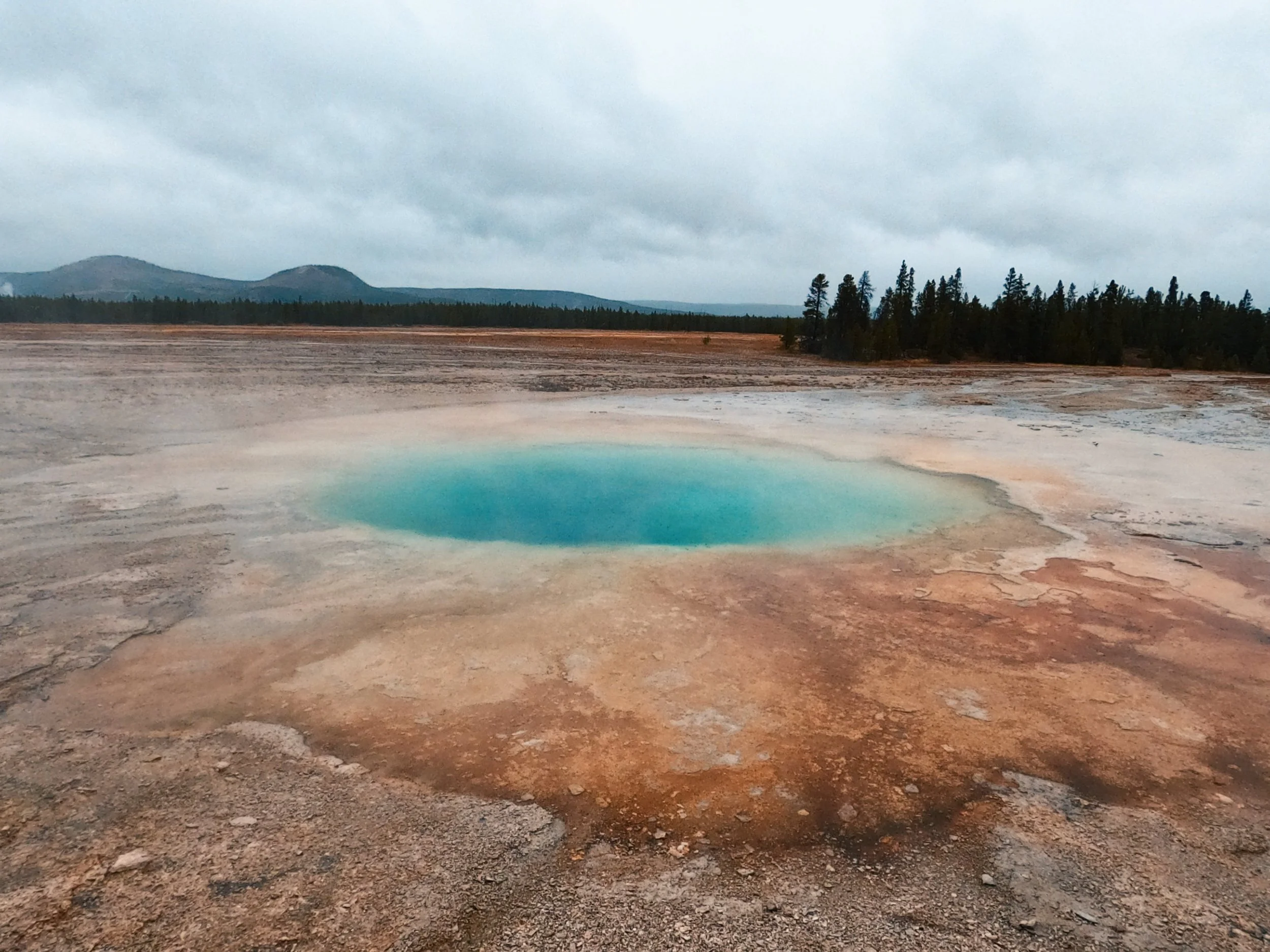
The neighboring ‘Opal Pool,’ viewed from the boardwalk
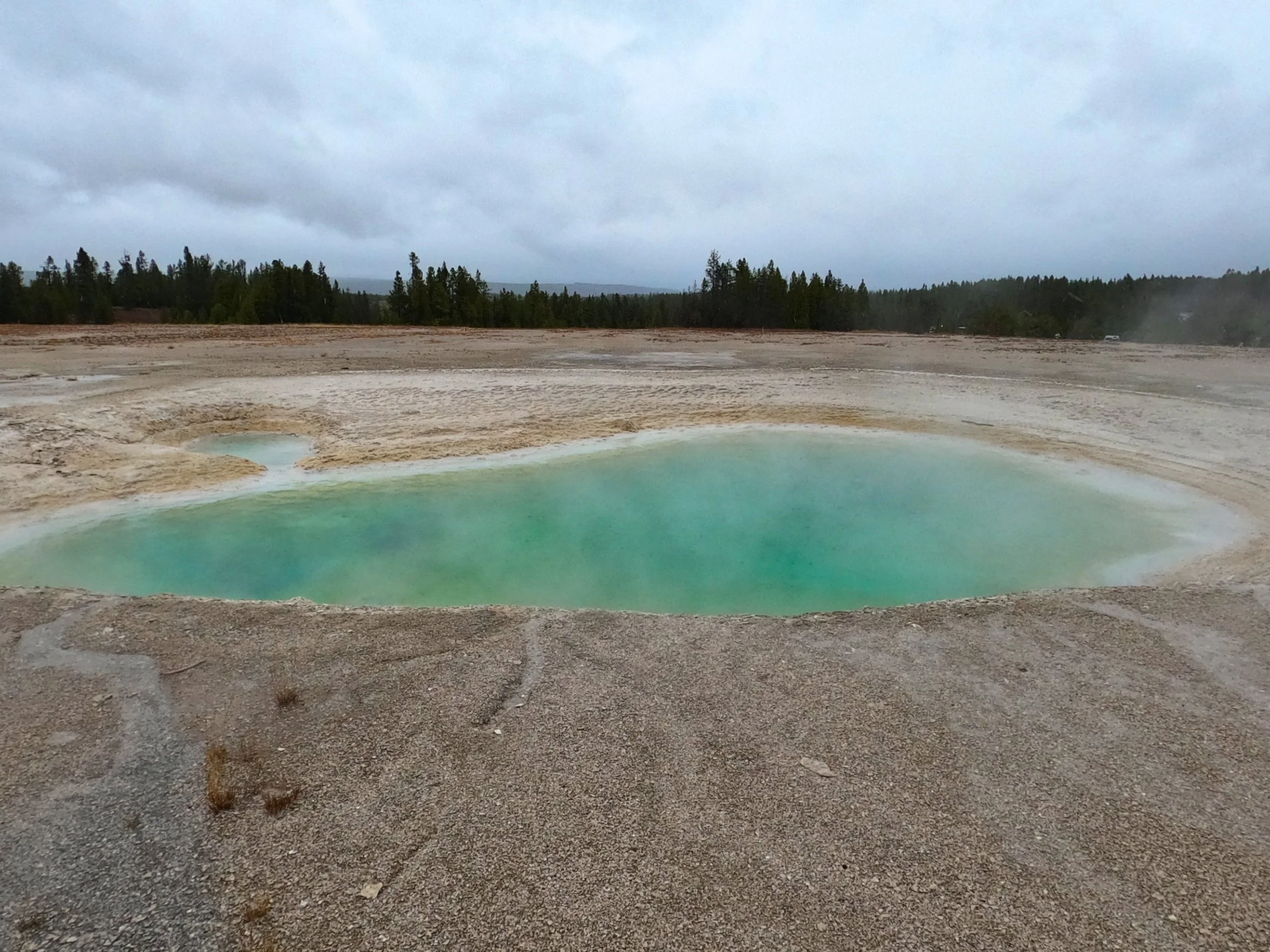
‘Turquoise Pool,’ found beside Opal Pool
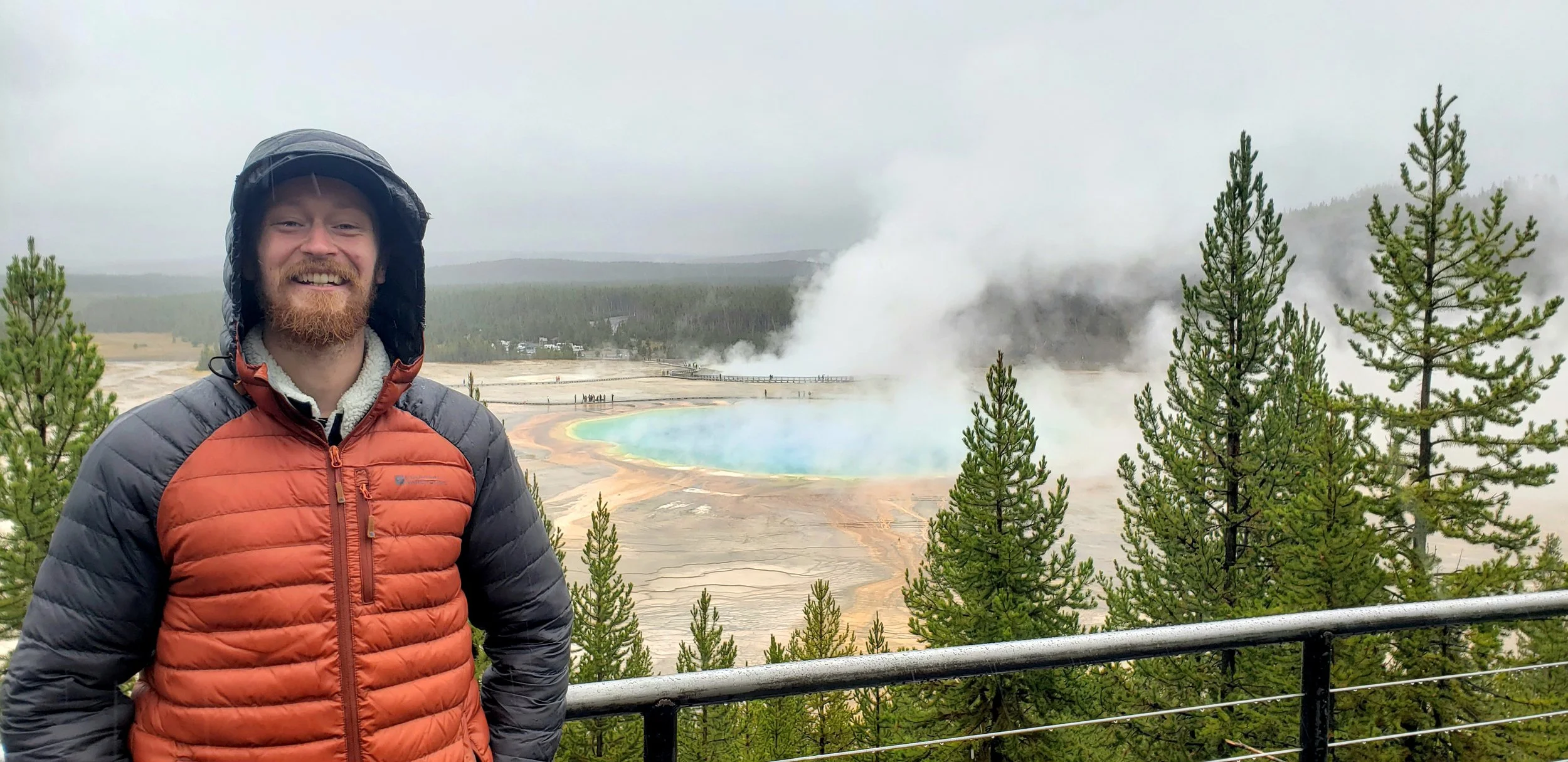
Photo of me at the top of the Overlook Trailhead! A dream come true!
If you love adventures, unexpected surprises, and places that gives you a sense of awe and raw accomplishment, put this spot on your bucket list! I went just a few days before my 26th birthday, and it was quite the way to close off being 25! I will 100% come back here to the mighty spring!
